The Ultimate Koh Samui Travel Guide 2026
Everything an 8-year local knows about Koh Samui, packed into one no-fluff guide.
- Book Samui flights 3-6 months early to avoid Bangkok Airways price surges, or use the Surat Thani ferry backup for half the cost
- Stay east coast (Chaweng, Lamai, Bophut) for first-timers who want easy access to everything, north shore for families and peace
- InDrive beats Grab for price flexibility on short trips, expect 200-300 baht for cross-island rides
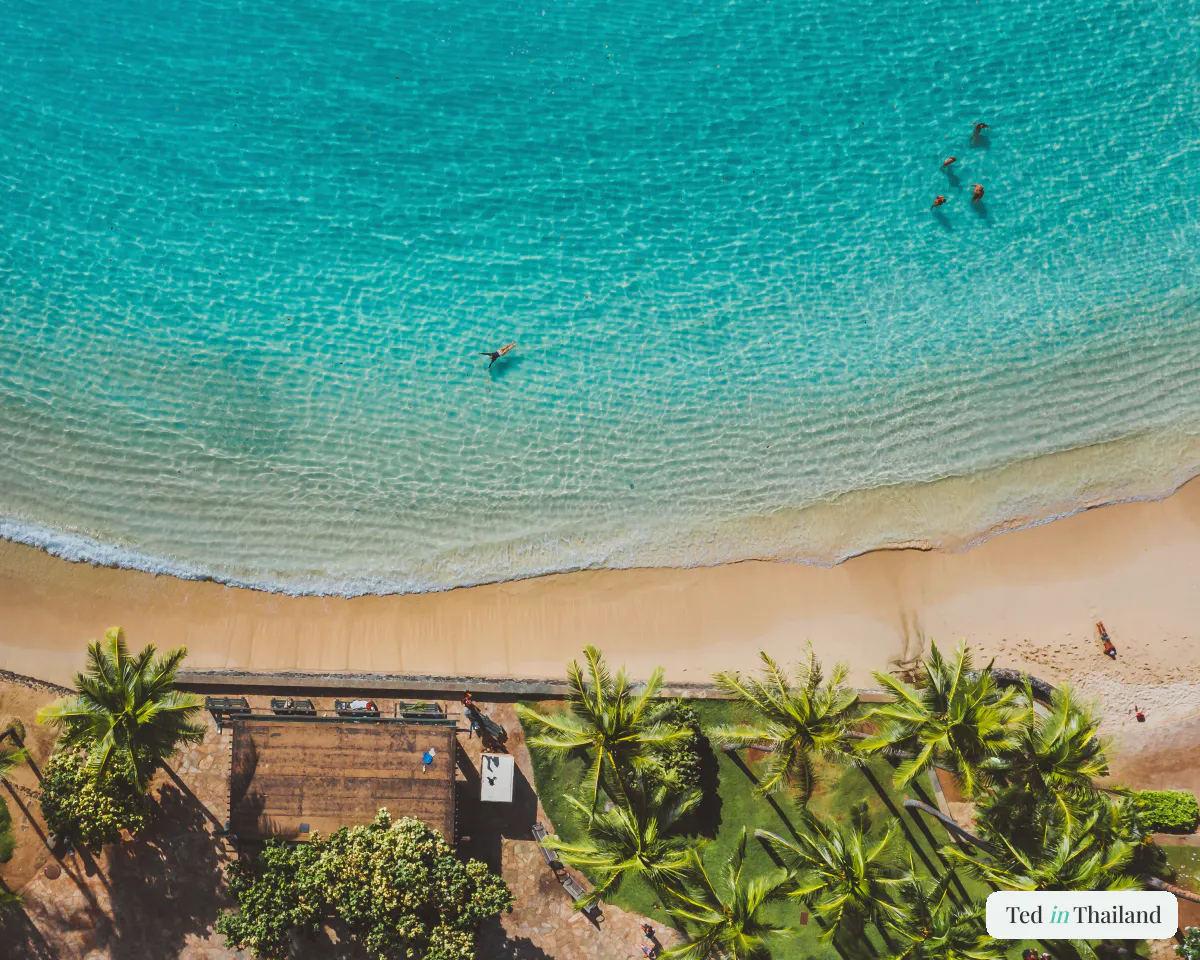
- Choeng Mon and Silver Beach offer the best swimming and snorkeling without leaving the island, calm water year-round
- Street food and local stalls serve incredible meals for 50-100 baht, look for busy spots with locals lining up
Koh Samui is one of those places that grabs you and doesn't let go. I know because it grabbed me about eight years ago, and I'm still here. What was supposed to be a "few months on a Thai island" turned into a full-blown life, and honestly, I wouldn't trade it for anything.
What I love most about Koh Samui is that it works for everyone. Backpackers crash in Chaweng dorms for 350 baht a night. Honeymooners disappear into private pool villas at the Four Seasons. Families plant themselves on Choeng Mon Beach and don't move for a week. Digital nomads set up shop at coworking spaces and somehow call this "work." Whether you're here for three days or three months, the island delivers.
This guide is everything I wish someone had handed me when I first landed at that tiny open-air airport. It covers where to stay, which beaches to hit, what to do (and what not to do), where to eat, how to get around, and all the practical stuff that saves you money and headaches. I've made every mistake so you don't have to. Let's get into it.
Ted's Tip
Bookmark this page before you go. Samui has a way of making you want to plan a second trip while you're still on your first.
Best Time to Visit Koh Samui
This is probably the question I get asked more than anything else, so I'll give you the honest version based on years of actually living through every season here.
Koh Samui is warm year-round. You're not going to show up in July and need a jacket. The real question isn't "when is it warm?" but "when is the weather most reliable for beach days?"

The sweet spot is February through June. These months deliver the most consistent sunshine, calm seas, and ideal conditions for swimming, snorkeling, and island-hopping to places like Ang Thong National Marine Park. February and March are probably the most reliably gorgeous months on the island. April gets hotter and more humid as Thailand heads into Songkran (Thai New Year, mid-April), which is a fantastic time to visit if you want to experience one of the biggest cultural celebrations in the country.
May through September is what locals call the green season. Showers become more frequent starting around June, but they're usually short and intense rather than all-day affairs. The upside? Crowds thin out dramatically, hotel prices drop, and the island turns impossibly green and lush. I've had some of my best beach days in July, honestly. September is often the cheapest month if you're budget-conscious and flexible.
October and November are the months I'd steer you away from if you need guaranteed beach weather. This is when the Gulf monsoon really settles in. November regularly posts the highest rainfall totals of the year, and rough seas can disrupt ferry schedules and cancel island-hopping trips. It's not a disaster, but if you've only got five days and you need sun, this isn't the window.
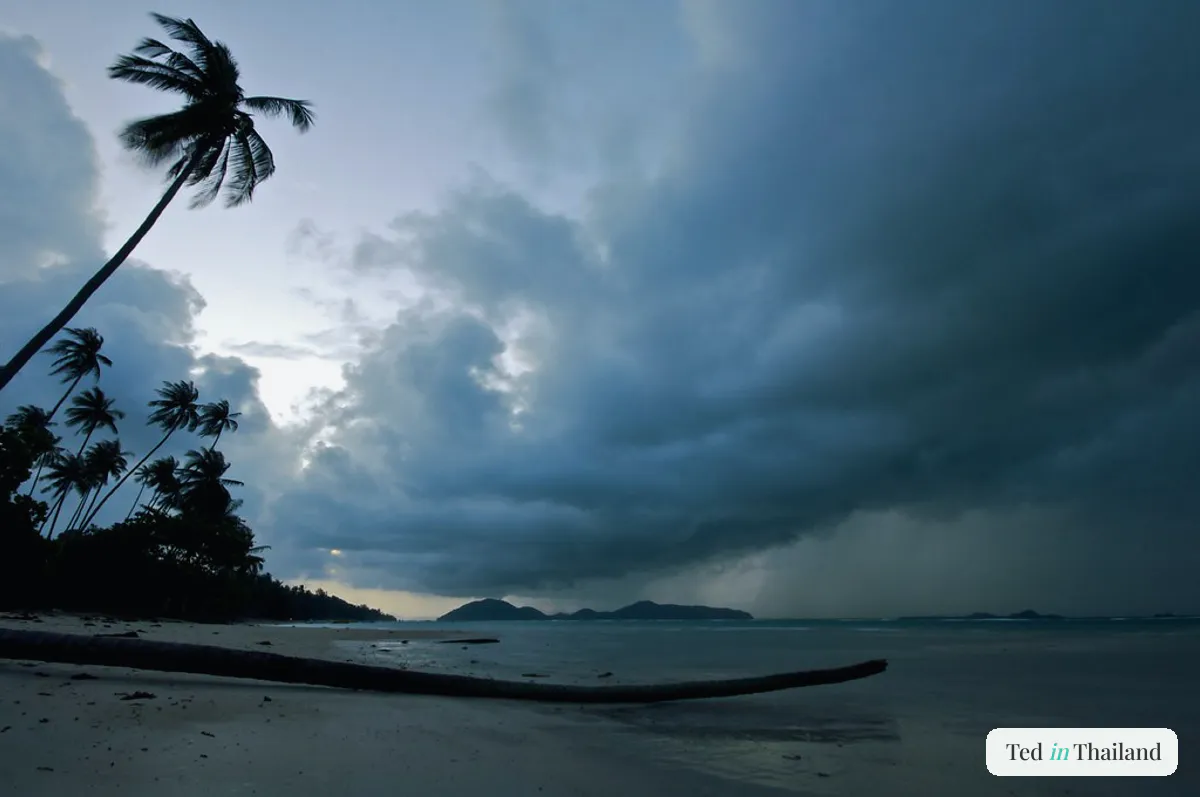
December bounces back fast. By mid-December, conditions are usually sunny and pleasant again, and the island fills up quickly for the Christmas and New Year rush. This is peak season pricing at its finest, so book early if you're planning a holiday trip. January stays busy with post-holiday travelers and generally offers excellent weather with calmer crowds than the Christmas week.
The honest truth? I've seen beautiful days in every single month. But if you're planning your first trip and want the best odds, aim for February through April. You'll get great weather, manageable crowds, and the water will be crystal clear for snorkeling at places like Silver Beach and Coral Cove.
Ted's Tip
If you can swing a trip during Songkran in mid-April, do it. The whole island turns into a water fight. It's hot, chaotic, and one of the most fun experiences you can have in Thailand. Just keep your phone in a waterproof bag. I learned that one the hard way. I've got a full guide on the best time to visit Koh Samui with month-by-month breakdowns if you want the deep dive.
How to Get to Koh Samui
Getting here is easier than most people think. There are two main routes, and which one you pick depends on your budget and how much travel time you're willing to deal with.
The fastest option is flying into Koh Samui Airport (USM). Bangkok to Koh Samui takes about an hour by air, and you'll land at one of the most charming airports in Asia. It's small, open-air, and you walk through tropical gardens between the gate and baggage claim. What most people don't realize is that the airport for Koh Samui is actually privately owned by Bangkok Airways, which controls most of the scheduled seats into Samui. Off-peak economy fares run roughly 2,000 to 3,500 THB, but peak season and last-minute bookings can push that to 6,000+ THB. If you're flexible with dates, early morning flights tend to hold the cheapest fare buckets. For points travelers, Qantas Frequent Flyer sometimes surfaces Bangkok Airways seats, and Avios redemptions are in the 6,000 to 12,000 range for the domestic hop.

The budget-friendly alternative is flying into Surat Thani on the mainland, then taking a ferry across. Seatran and Raja are the main ferry operators, with multiple crossings per day. The ferry ride takes roughly 1 to 1.5 hours depending on the operator, and you'll want to budget another 1 to 1.5 hours for the land transfer from Surat Thani Airport to Donsak Pier. It adds time, but it saves serious money, and the ferry crossing itself is a scenic ride across the Gulf. Just make sure you don't arrive too late in the day, because missing the last ferry means an unexpected overnight in Surat Thani. I break down every operator and schedule in my Surat Thani to Koh Samui ferry guide.

If you're coming from further afield, Singapore to Koh Samui has direct flight options, and many travelers self-connect through Bangkok. If you're doing a self-connect with separate tickets, allow at least 3 to 4 hours for baggage reclaim and recheck.
One thing worth knowing about the airport: rideshare apps like Grab can't pick you up directly at the arrivals curb. App drivers are restricted from the immediate arrivals area, so plan to meet your driver off airport grounds (it's only a short walk out, but it could be annoying with luggage or kids). The simplest solution is to prebook a private transfer, especially if you're arriving late or traveling with kids. For the full breakdown of every route on and off the island, see my Koh Samui transport master guide.
Ted's Tip
Always pay for taxis and transfers in Thai Baht (THB). Drivers offering to take foreign currency are setting their own exchange rate, and it will not be in your favor.
Where to Stay: The Full Samui Island Breakdown
The Lay of the Land
Before we get into the planning details, here's a quick lay of the land so you understand what kind of island you're walking into.
Koh Samui is Thailand's second-largest island. The whole place is connected by one main ring road that loops the coastline, with smaller roads cutting inland toward the mountainous, jungle-covered interior. The east coast is where most of the action is, the west coast is the opposite (more on that below).
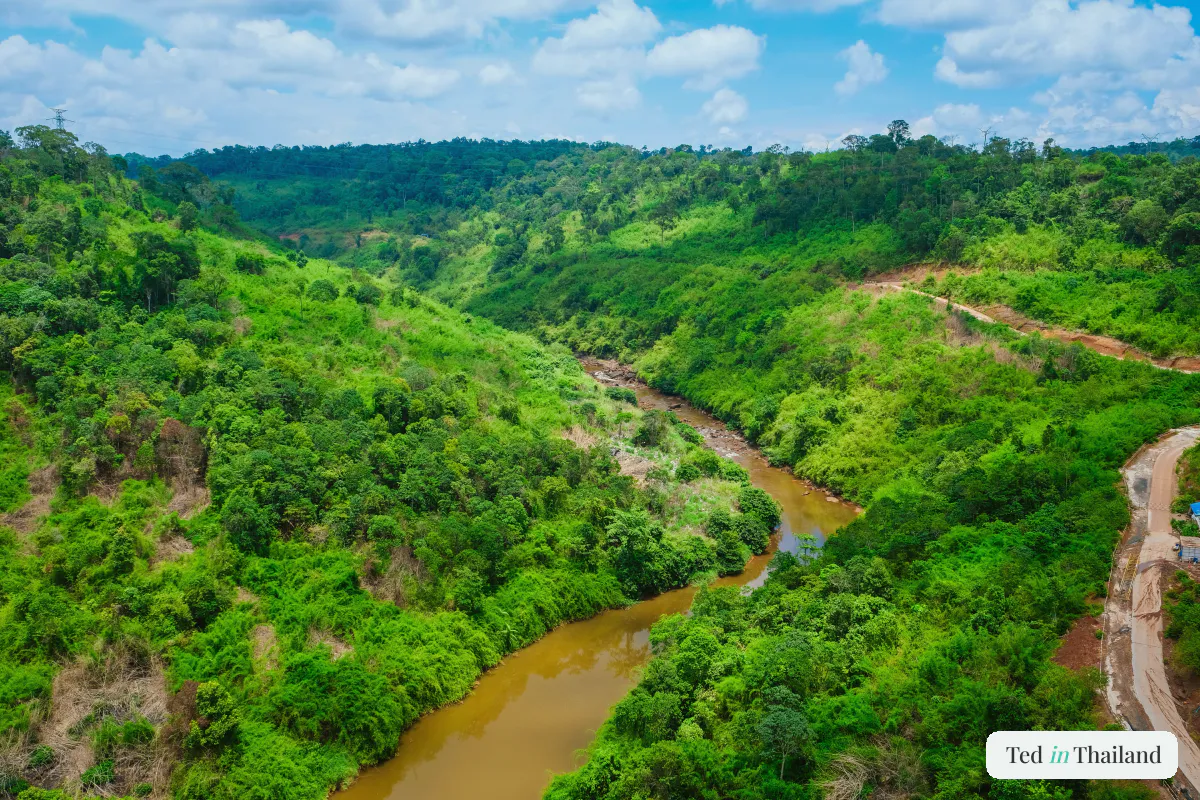
The interior is where things get interesting. The mountains are lush and steep. That's where you'll find waterfalls like Na Muang, Secret Buddha Garden, and viewpoints that make you understand why you flew halfway around the world.
The ring road makes navigation simple: you can drive the full loop in about an hour without stops, which means nothing is ever really far away. If you want the deeper geography and history, I wrote a whole piece all about Samui island, Thailand.
Ted's Tip
Bookmark this page (you didn't listen the first time, did you?). I've written deep-dive guides on almost every topic below (beaches, hotels, restaurants, transport, you name it), and I'll link to them throughout. Think of this as your home base for planning, and the individual guides as your on-the-ground playbooks.
Choosing the Right Area in Koh Samui
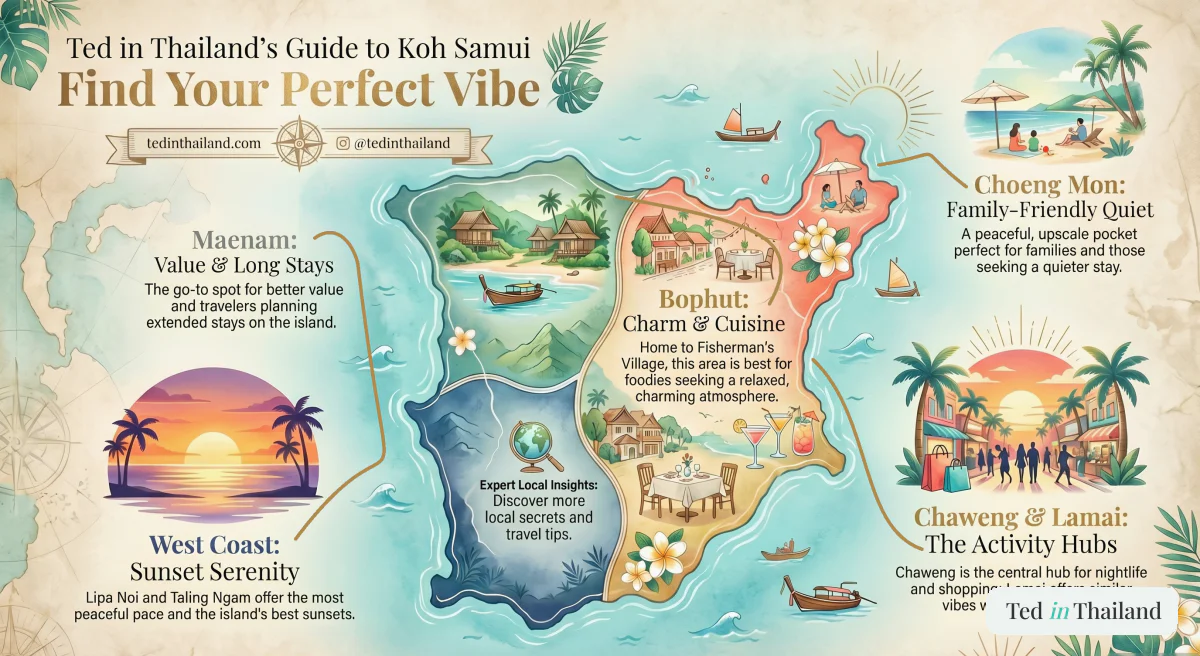
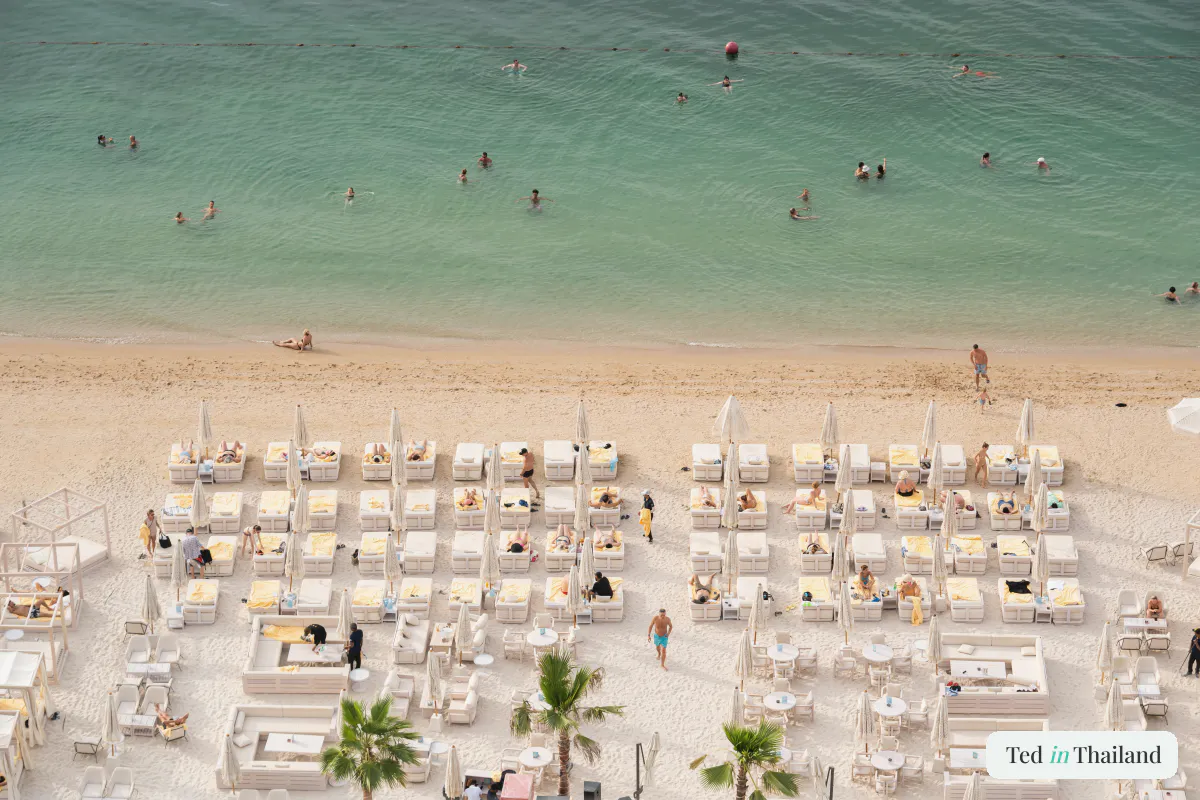
Chaweng is the main event. It's the longest beach strip, the biggest concentration of hotels, restaurants, shopping (Central Festival is here), and nightlife. If this is your first time and you want everything within walking distance, Chaweng delivers. The tradeoff is that it's the busiest and loudest area, especially near the main road after dark.
Lamai sits southeast and functions like Chaweng's (slightly) more relaxed sibling. Lamai Beach is broad, golden, and backed by a decent selection of mid-range hotels and local restaurants. You still get nightlife and night market access, but without the full Chaweng intensity. It's a solid compromise for travelers who want some energy but value calmer mornings.
Bophut and Fisherman's Village on the north coast is where I'd send food lovers and couples. The evening walking street at Fisherman's Village is one of my favorite spots on the island. Good restaurants, boutique hotels, and a genuine village atmosphere. Bophut Beach itself has sand quality that varies by spot, but the overall vibe is excellent.
Choeng Mon Beach (northeast) is the family pick. It's a curved, protected bay with calm, shallow water, smaller resorts, and a quiet pace. It's also close to the airport, which is handy with kids. If you want peaceful mornings and easy swimming, this is your zone.
Maenam Beach runs along the north shore and attracts longer-stay travelers and budget-conscious visitors. The sand is a long, relatively flat golden stretch with natural coconut palm shade. There's a great local morning market near the pier, and monthly rentals here offer some of the best value on the island.
Lipa Noi and Taling Ngam on the west coast are the sunset specialists. Lipa Noi Beach has fine, pale sand and one of the flattest, shallowest shorelines on the island. Taling Ngam offers dramatic views out to the Five Islands. These areas are quieter, less developed, and perfect for travelers who prioritize scenery and peace over walkable nightlife.
Ted's Tip
Even if you base yourself in quiet Maenam, a night out in Chaweng is just a 20-minute ride away. Pick the area that matches your morning vibe, not your evening plans. I've got a full where to stay in Koh Samui guide with much deeper area breakdowns.
Best Hotels in Koh Samui by Budget
Now for the fun part: actual hotels with actual prices. I've broken this into three tiers so you can find something regardless of what your wallet looks like. All prices are per night and fluctuate with seasons, so treat these as solid planning anchors.
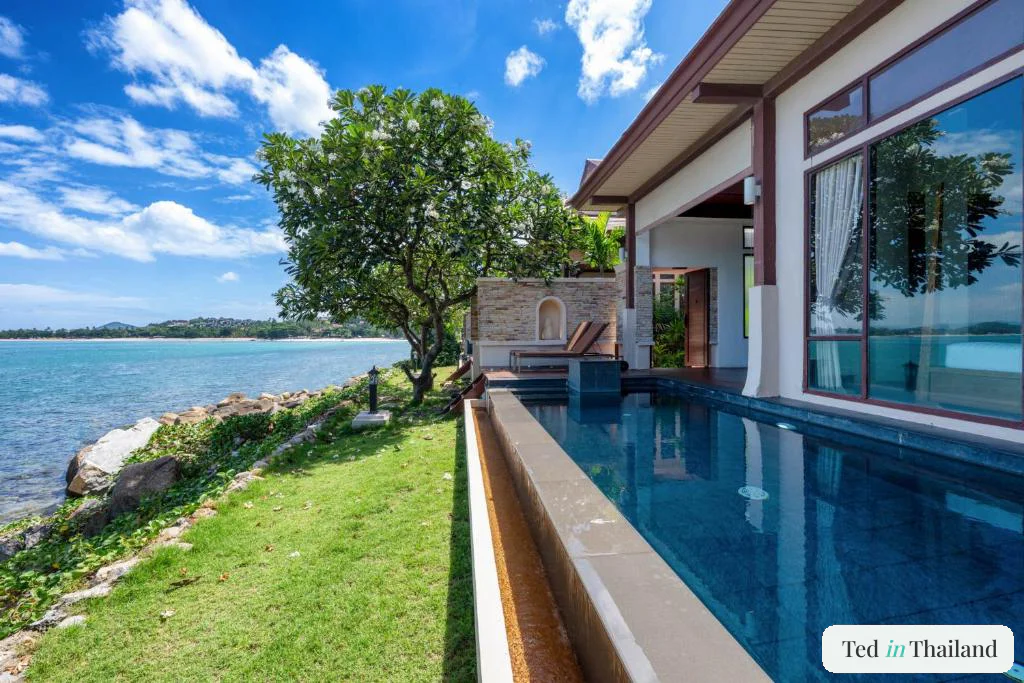
Luxury (12,000+ THB / ~$350+ per night):
- The Four Seasons Resort on Laem Yai is the island's gold standard. Private pool villas, insane staff-to-guest ratios, and a butler who remembers your coffee order. Expect 50,000 to 150,000+ THB per night. (See my full Four Seasons Koh Samui review.)
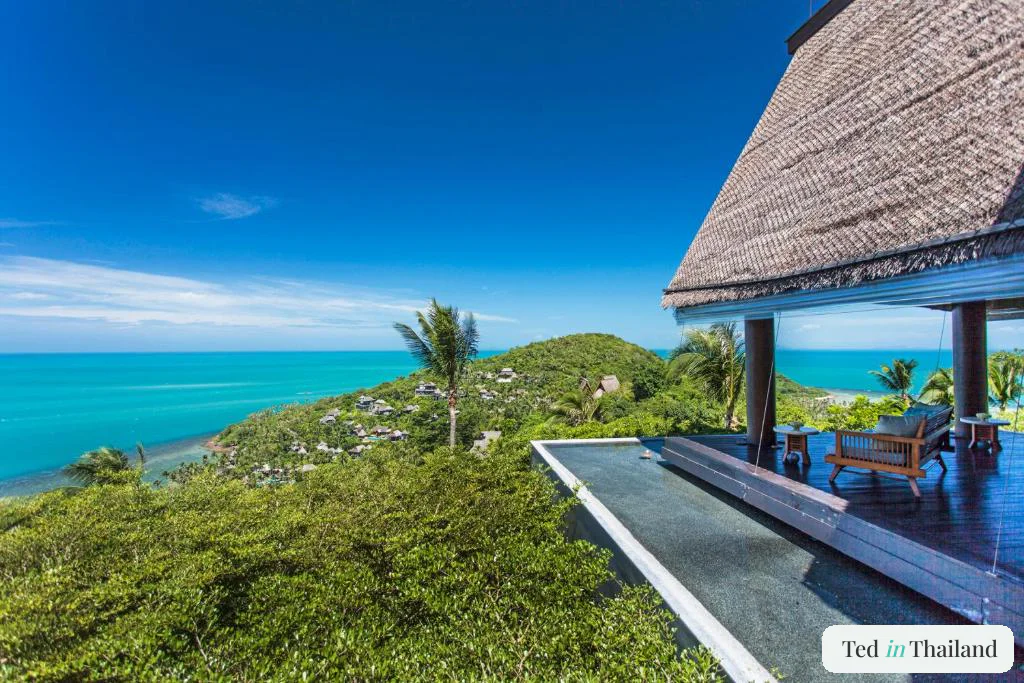
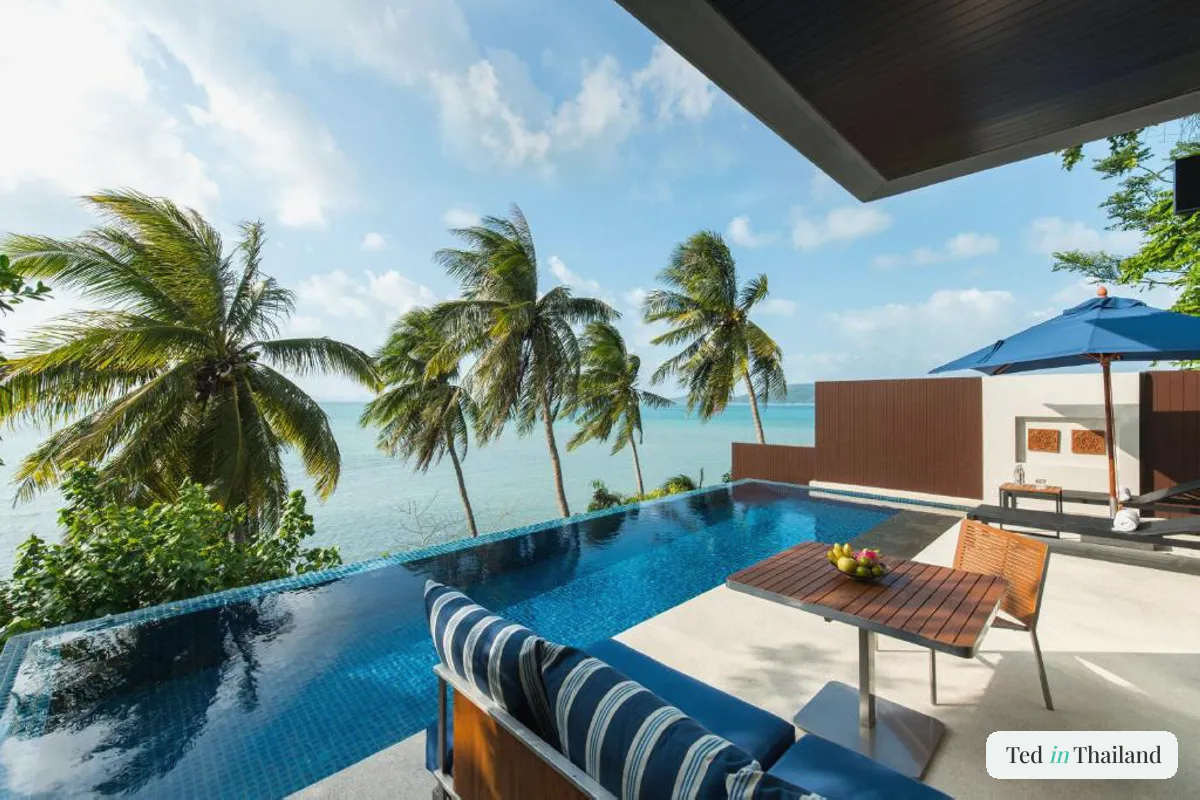
- The Conrad Koh Samui in Taling Ngam is another standout, with massive private pool villas and sweeping five-island sunset panoramas at 12,000 to 45,000 THB. If you're a Hilton Honors member, the Conrad can be a strong points redemption.

- For something newer, the Kimpton Kitalay Samui on Choeng Mon's sheltered bay runs 10,000 to 40,000 THB and has excellent family programming alongside design-forward rooms. (Full Kimpton Kitalay review here.)
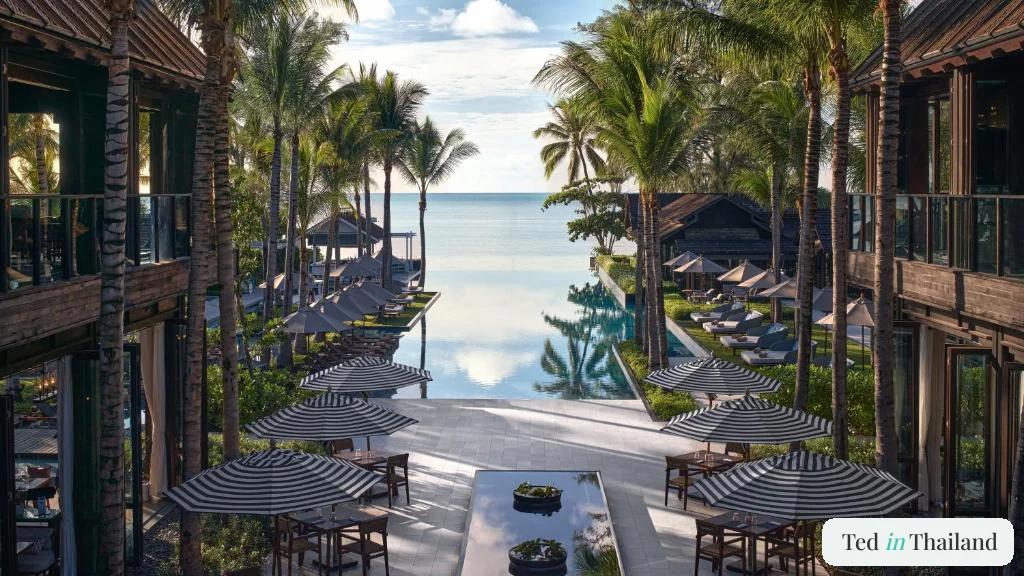
Mid-Range (2,000 to 9,000 THB / ~$55-$250 per night):
This is where Koh Samui genuinely punches above its weight.
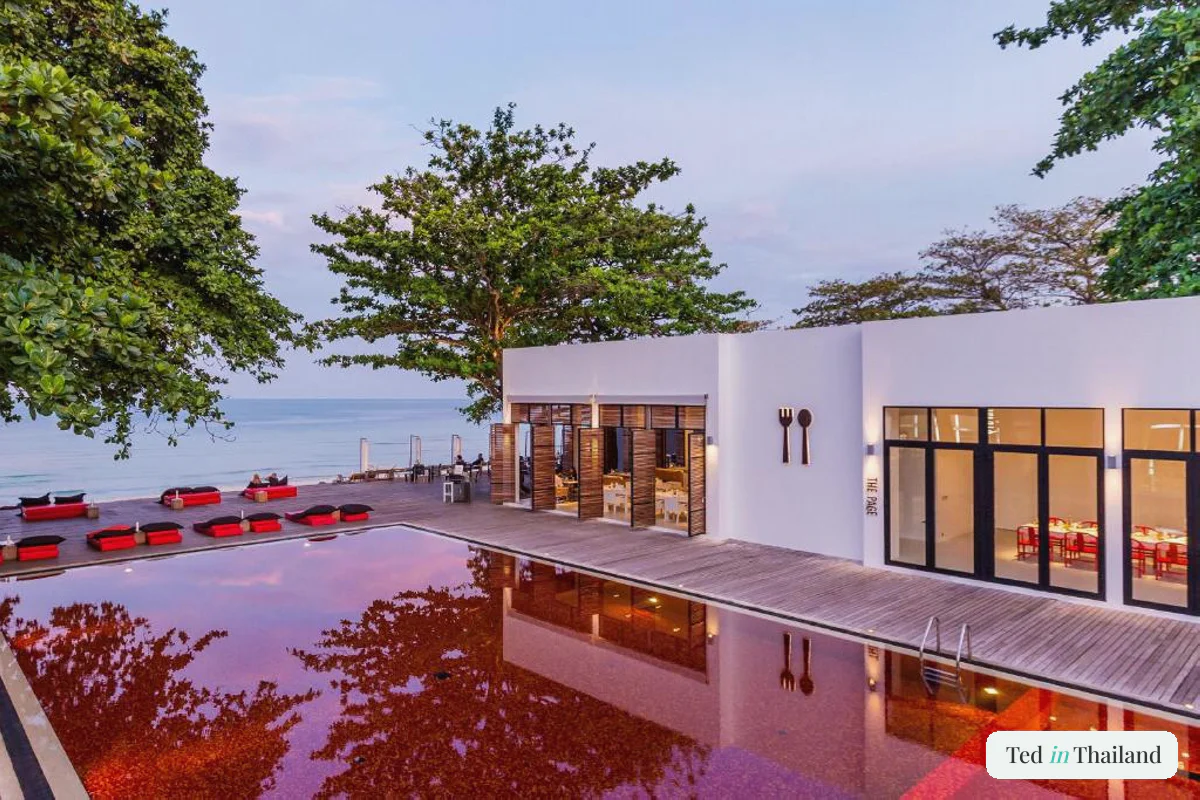
- The Library in Chaweng Noi at 4,000 to 12,000 THB is one of the most distinctive hotels on the island. The famous red pool is real and as photogenic as advertised.
- Pico Samui in Bophut is a small, family-run beachfront property with rooms from 2,000 THB and beachfront pool villas around 9,000 THB. The staff are the kind of people who know your name by day two.
- Over in Chaweng, the Briza Beach Resort is family-friendly with a solid beachfront position.
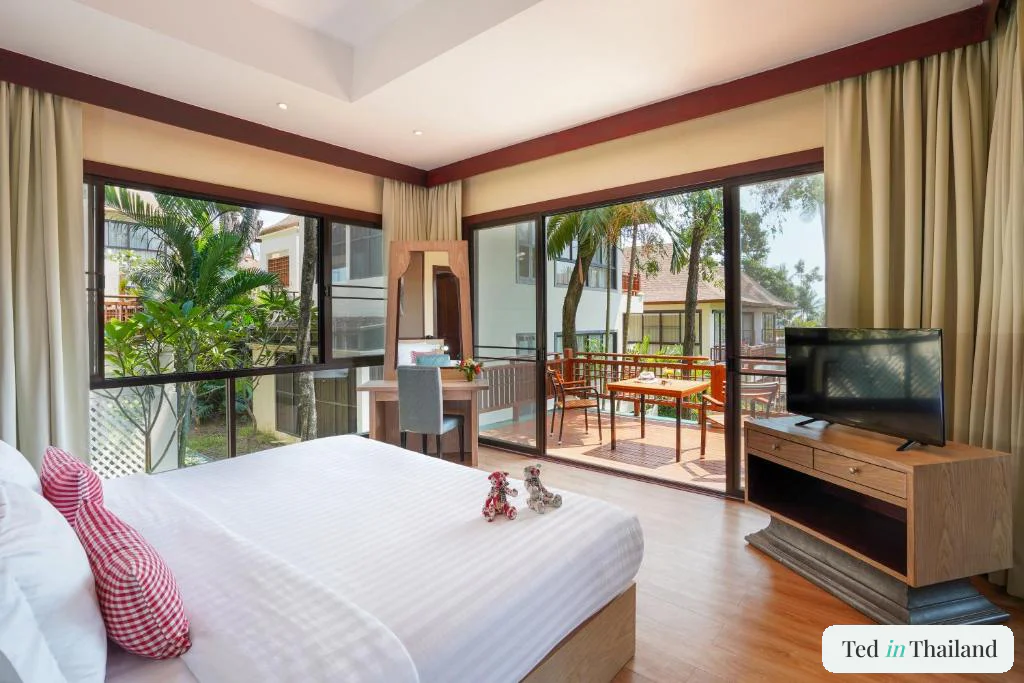
- In Lamai, the Escape Beach Resort sits right on the sand in Maenam and consistently earns praise for value and beach access.
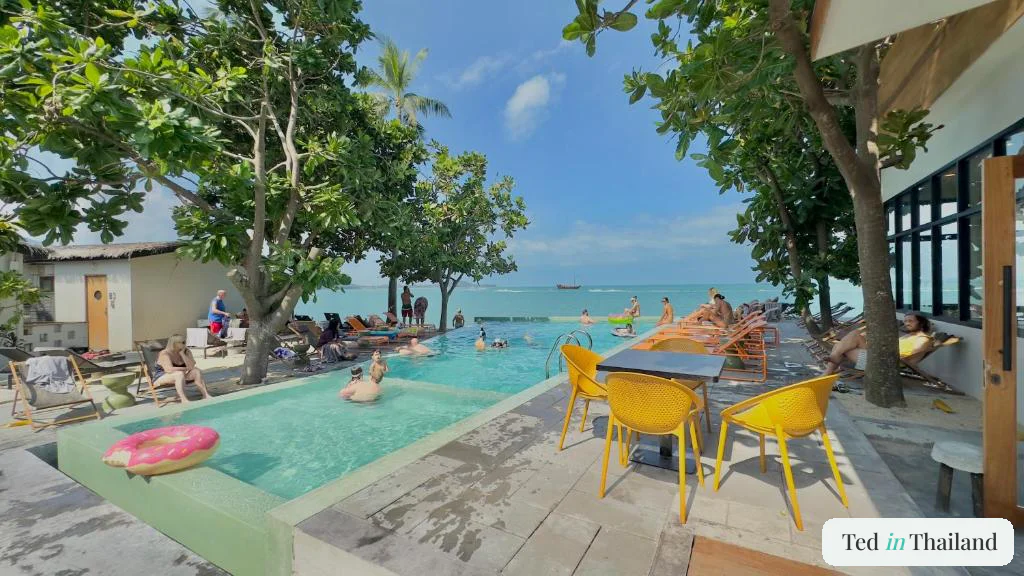
- The Sarann Hotel on Chaweng Noi offers a quieter mid-range alternative if you want to avoid the main Chaweng strip.
Budget (250 to 1,800 THB / ~$7-$50 per night):
Backpackers have it good here.
- Lub d Koh Samui in Chaweng is the top social hostel with modern pod-style dorms from about 350 THB, two pools, a beach club, and organized events.
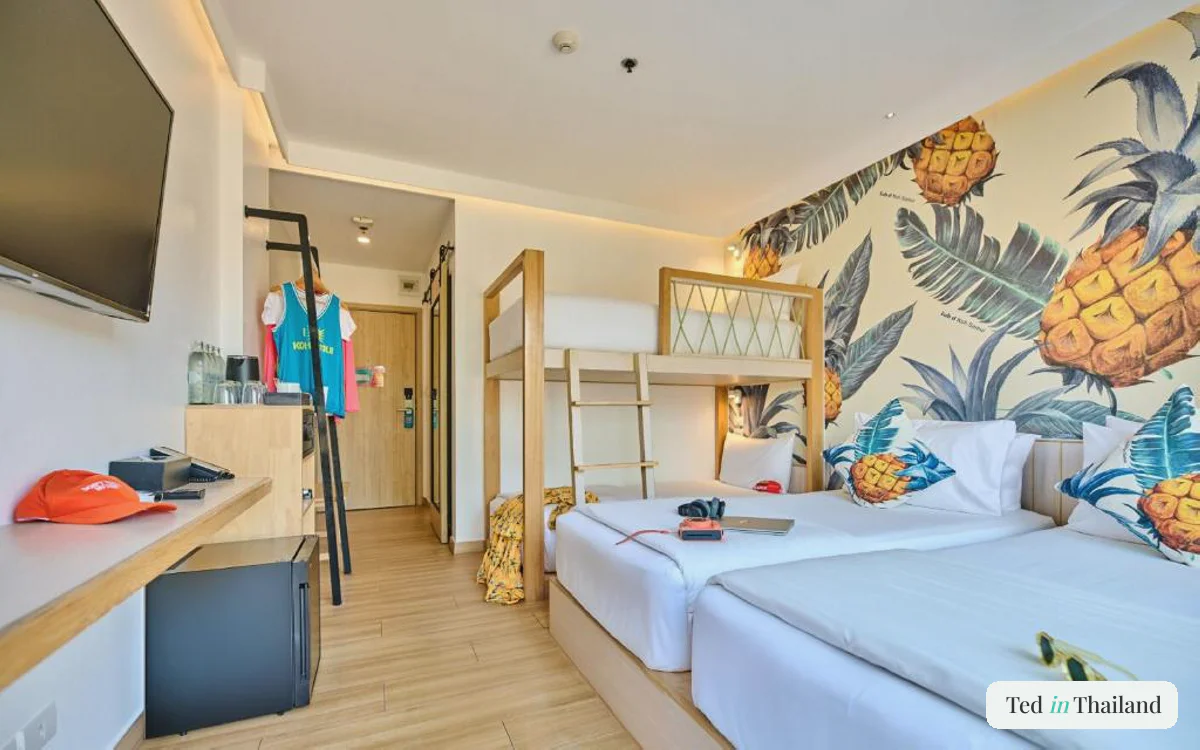
- For something calmer, Hi Samui Hostel near Choeng Mon has a community library vibe and runs 300 to 600 THB for dorms. Private fan rooms and basic bungalows across the island range from 400 to 900 THB per night.
- If you're staying a month or longer, one-bedroom condos can be negotiated down to 12,000 to 20,000 THB per month in areas like Maenam, especially during the low season.
Ted's Tip
For deep dives on each budget tier, check out my guides on luxury resorts, boutique and mid-range hotels, and budget hotels.
Best Beaches in Koh Samui
You could spend an entire vacation doing nothing but beach-hopping, and honestly, that's not a bad plan. The island has over 20 beaches, and they're not all the same. The east coast and west coast have completely different personalities, and knowing that upfront will save you from showing up in the wrong place at the wrong time.
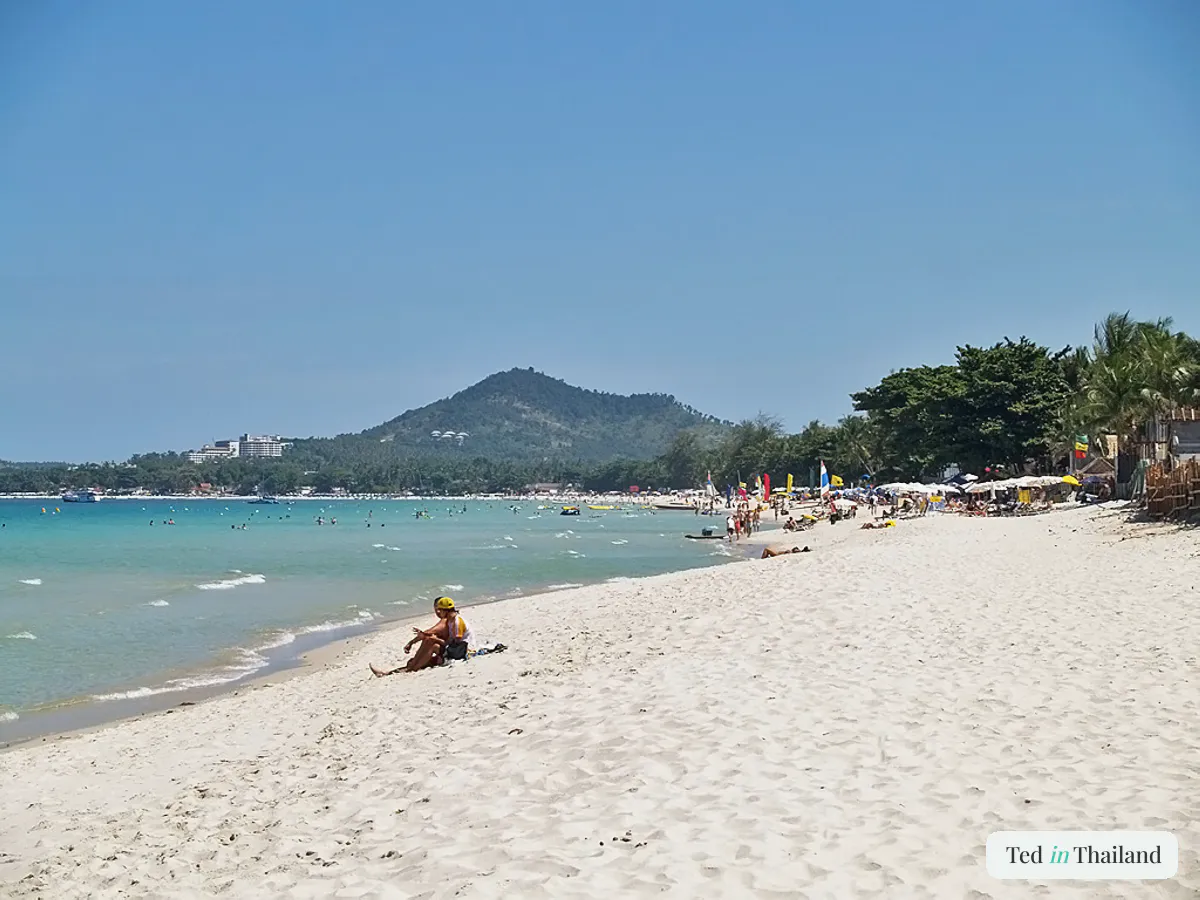
Chaweng Beach is the headliner. It's the longest strip of soft, light-gold sand on the island, with water sports, sunbed vendors, beachfront restaurants, and everything else you'd expect from the main tourist beach. Mornings are the move here. Get there early and you'll have calm water and clean sand before the crowds roll in. If Chaweng feels too busy, walk south to Chaweng Noi for the same quality sand with a fraction of the people.
Choeng Mon Beach is where families set up camp. The bay is curved and protected, the water is shallow and calm, and the vibe is easygoing. It's one of the safest swimming spots on the island for kids.
Lamai Beach is the next-best all-rounder: broad golden sand, a good stretch for swimming in calm months, and a more relaxed atmosphere than Chaweng. The northern end is particularly pleasant for families.
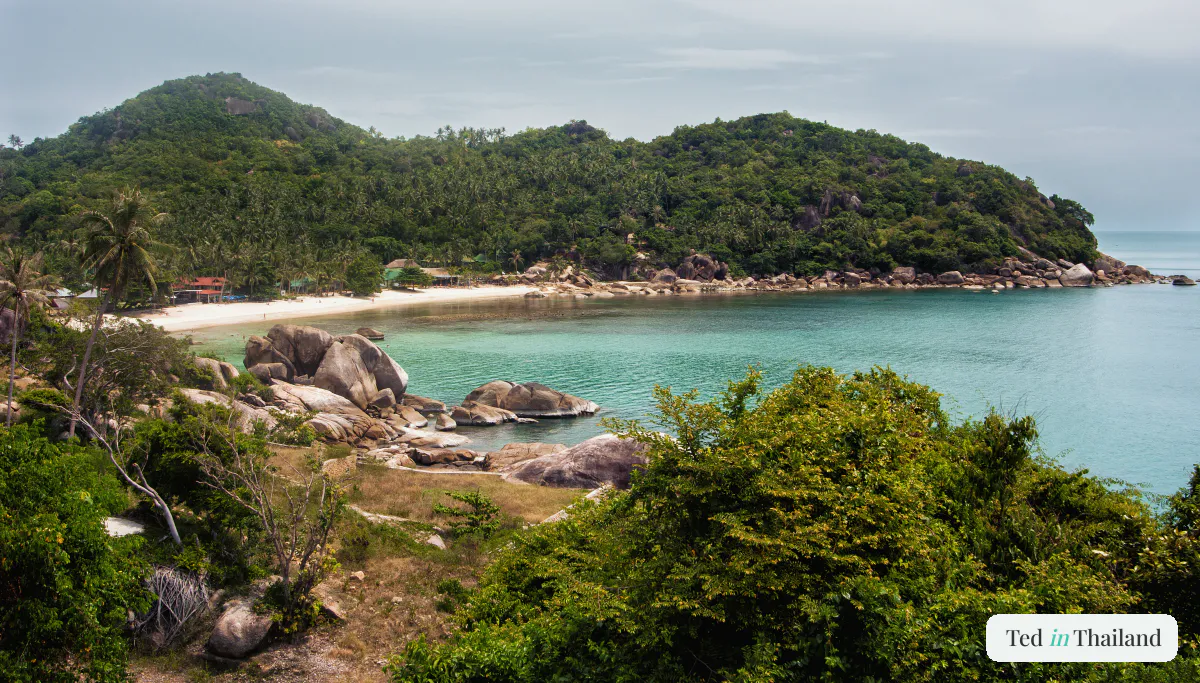
For snorkeling, Silver Beach and Coral Cove are your best bets without getting on a boat. Silver Beach sits in a small, sheltered cove with powdery white sand and some of the clearest water you'll find on the main island. Coral Cove is smaller and rockier, but the reef features right off the sand make it worth a stop with a mask. Manage your expectations though.
Then there's the west coast, and this is where I'd personally spend my evenings. Lipa Noi Beach has fine, pale sand and a flat, shallow shoreline that's perfect for wading and sunset watching. Taling Ngam offers those dramatic Five Islands views that make you want to sit there with a cold drink and not move for two hours.
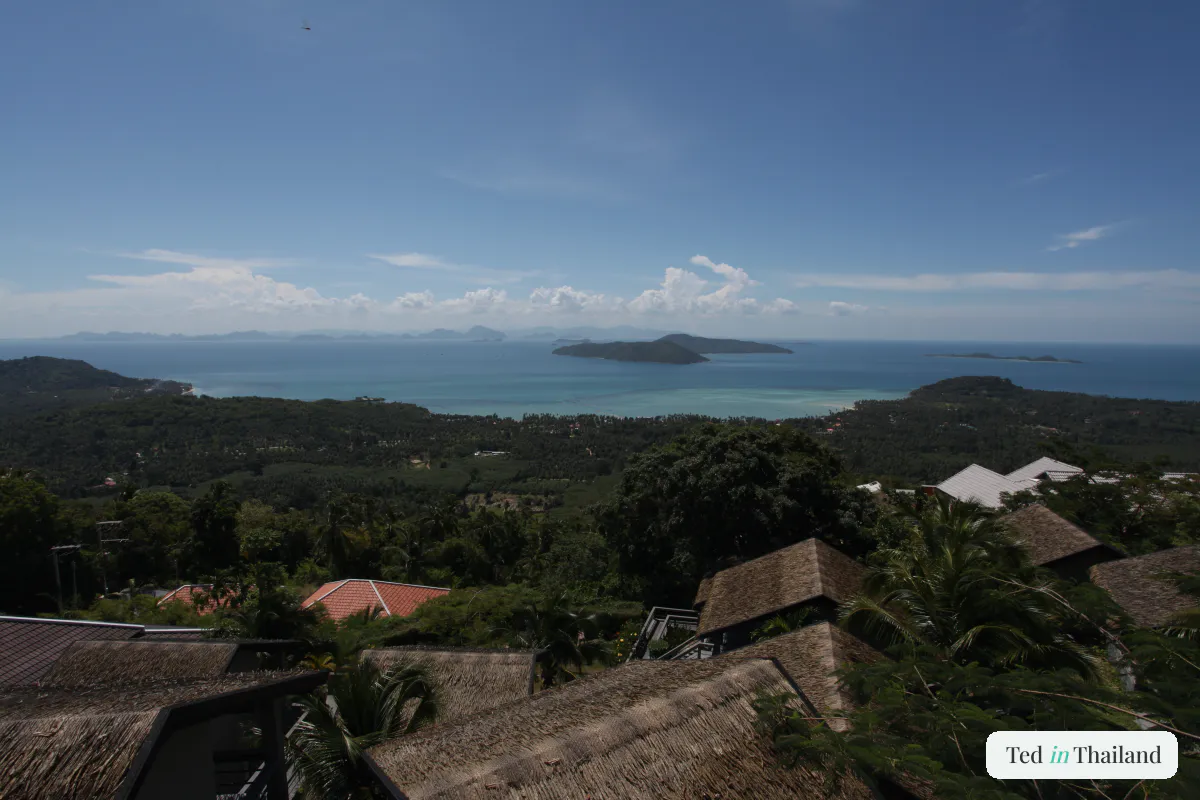
Maenam Beach on the north shore is a long, golden stretch with natural coconut palm shade. It's quiet, it's affordable, and the morning market near the pier is one of the most local spots on the island.
Ted's Tip
Mornings are always better for beach quality, water clarity, and swimming conditions on every beach. If you're planning to snorkel from shore, go before 10 a.m. Save the west coast for evenings, because the Koh Samui sunset from Lipa Noi or Taling Ngam will ruin every other sunset for you. I've written individual guides for all the best beaches in Koh Samui if you want the full rundown on each one.
Things to Do in Koh Samui
This island packs in way more than just beaches. Whether you're into temples, waterfalls, viewpoints, adventure activities, or getting the best massage of your life, there's enough here to fill weeks without repeating yourself. I'll hit the highlights, but I've got deep-dive guides on almost all of these if you want the full story. You can also browse the full things to do in Koh Samui master guide.
Temples
The two must-sees in Samui are Wat Phra Yai (Big Buddha) and Wat Plai Laem.

Big Buddha is a 12-meter golden Buddha statue on a small headland in the northeast, and it's usually the first cultural stop for visitors. Get there before 9 a.m. if possible to avoid the coach crowds.
Wat Plai Laem is nearby and features a colorful lakeside complex with a giant 18-armed Guanyin statue and fishponds. You can do both in under an hour, and they pair perfectly as a morning circuit.
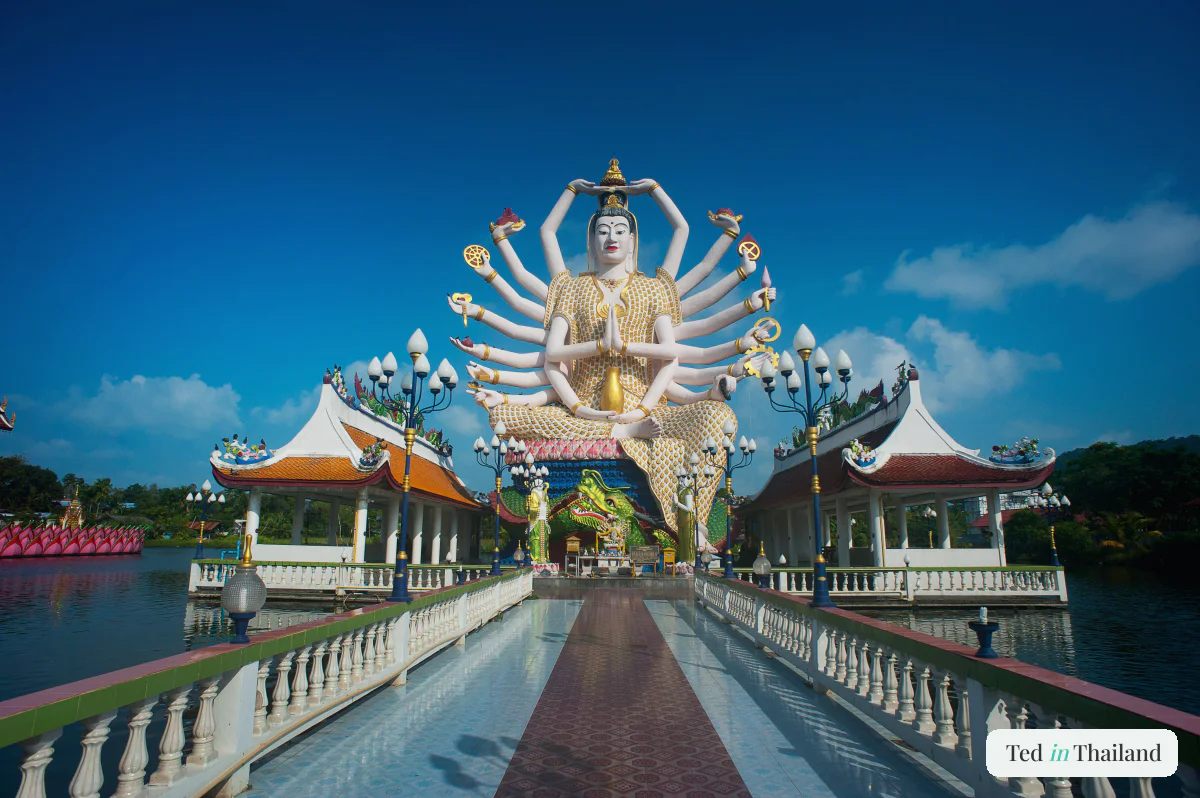
Dress modestly: covered shoulders and knees.
Waterfalls and the Secret Buddha Garden
Timing matters here: waterfalls have the best flow about 2 to 4 weeks after sustained rains. In dry months they can be bone-dry and disappointing.
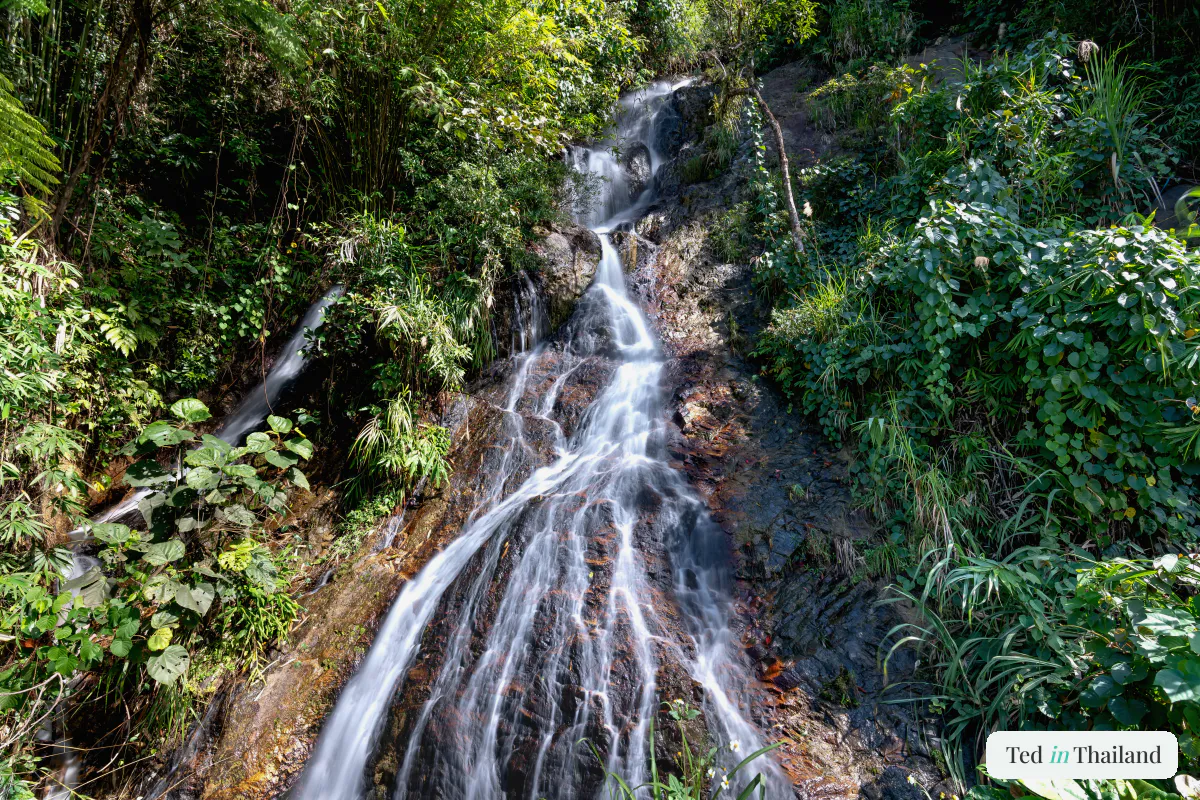
Na Muang Waterfall is the big one, literally the most substantial cascade on the island. Na Muang 1 is easier to access from the car park; Na Muang 2 requires an upstream jungle hike to reach but rewards you with a pool and real jungle atmosphere. I cover both falls plus Hin Lad in my Na Muang waterfalls guide.
Hin Lad Waterfall is smaller but delivers a beautiful multi-tier jungle swim away from the heavy crowds.
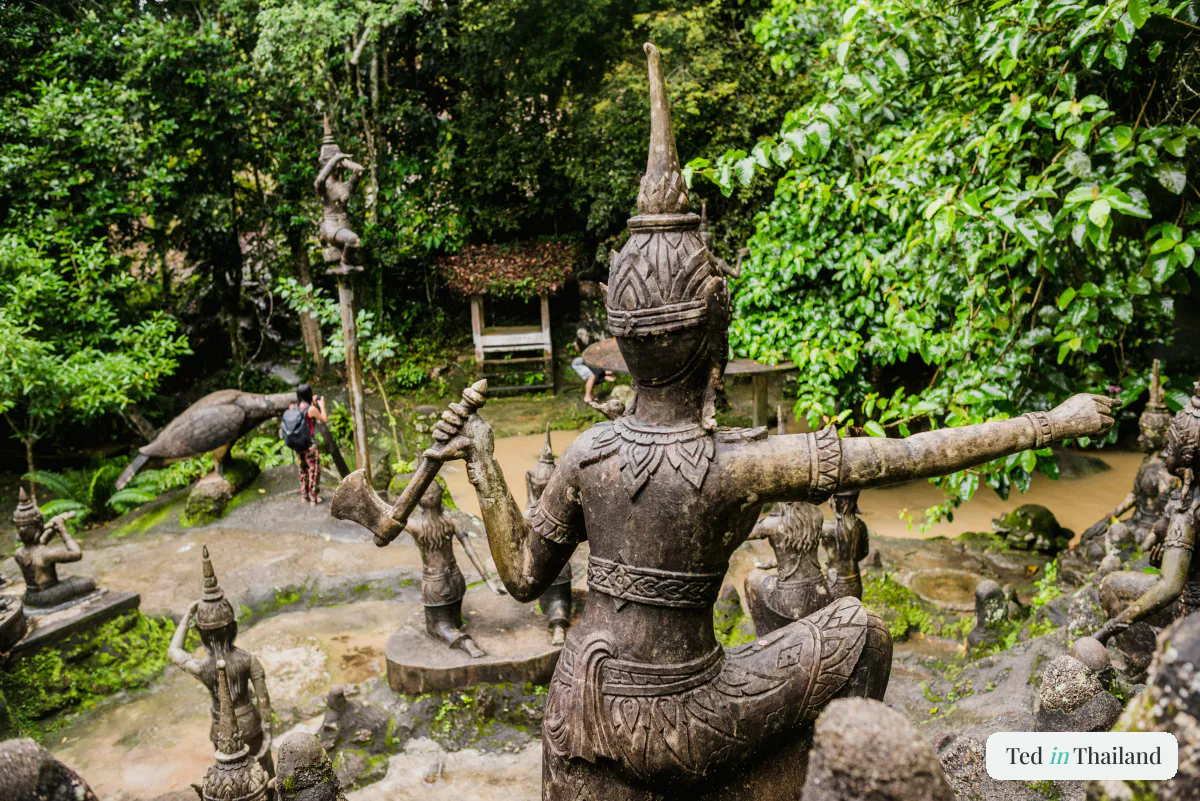
The Secret Buddha Garden is one of my favorite spots on the island. It's a collection of mossy concrete sculptures and quiet hilltop paths tucked into the interior hills, created by a local farmer. The access road is steep and rough, so either take a 4x4 tour or hire a local driver. I've got a dedicated Secret Buddha Garden guide with directions.
Viewpoints and Adventure
The Overlap Stone near Lamai is a distinctive rock formation with panoramic coastal views and way fewer visitors than you'd expect. Wear proper shoes because the approach can be rough. Full directions are in my Overlap Stone guide.
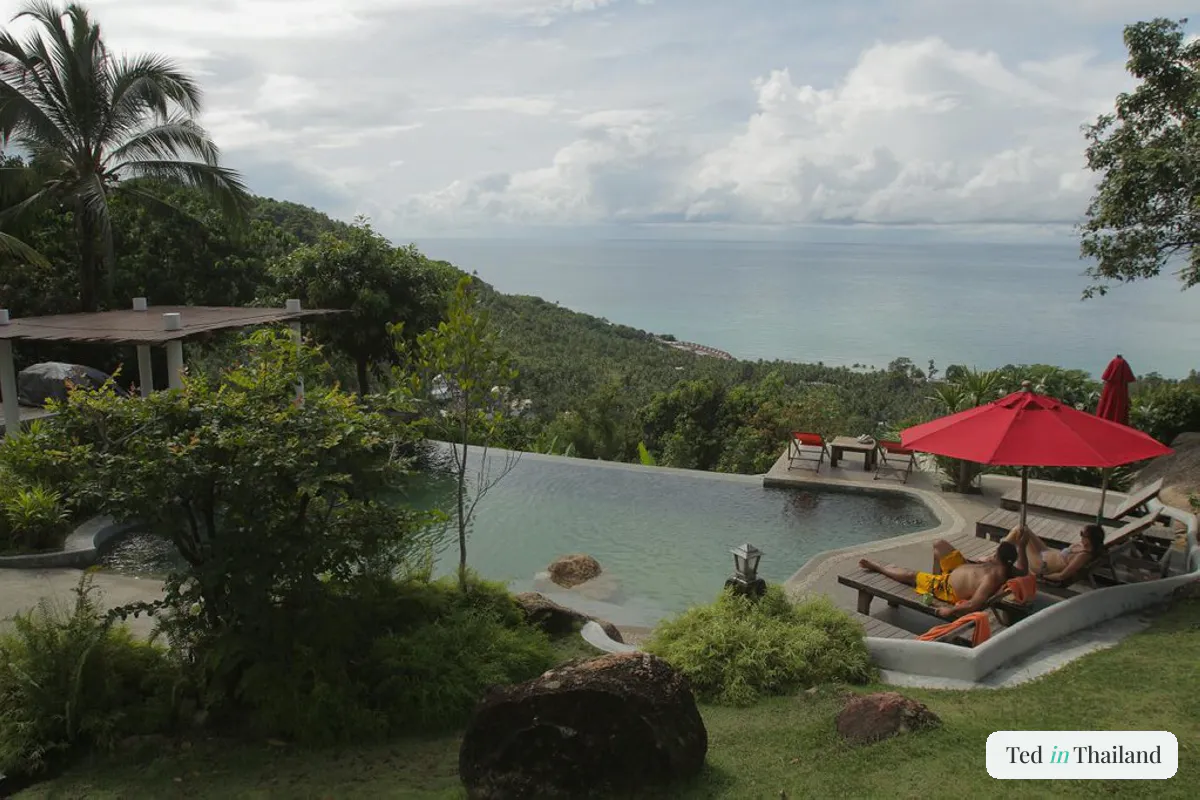
For the best sunset viewpoint on the island, The Roof Samui has become the go-to spot. And the Jungle Club above Chaweng Noi has beanbag seating with wide ocean views. Book a table on weekends because it fills up.
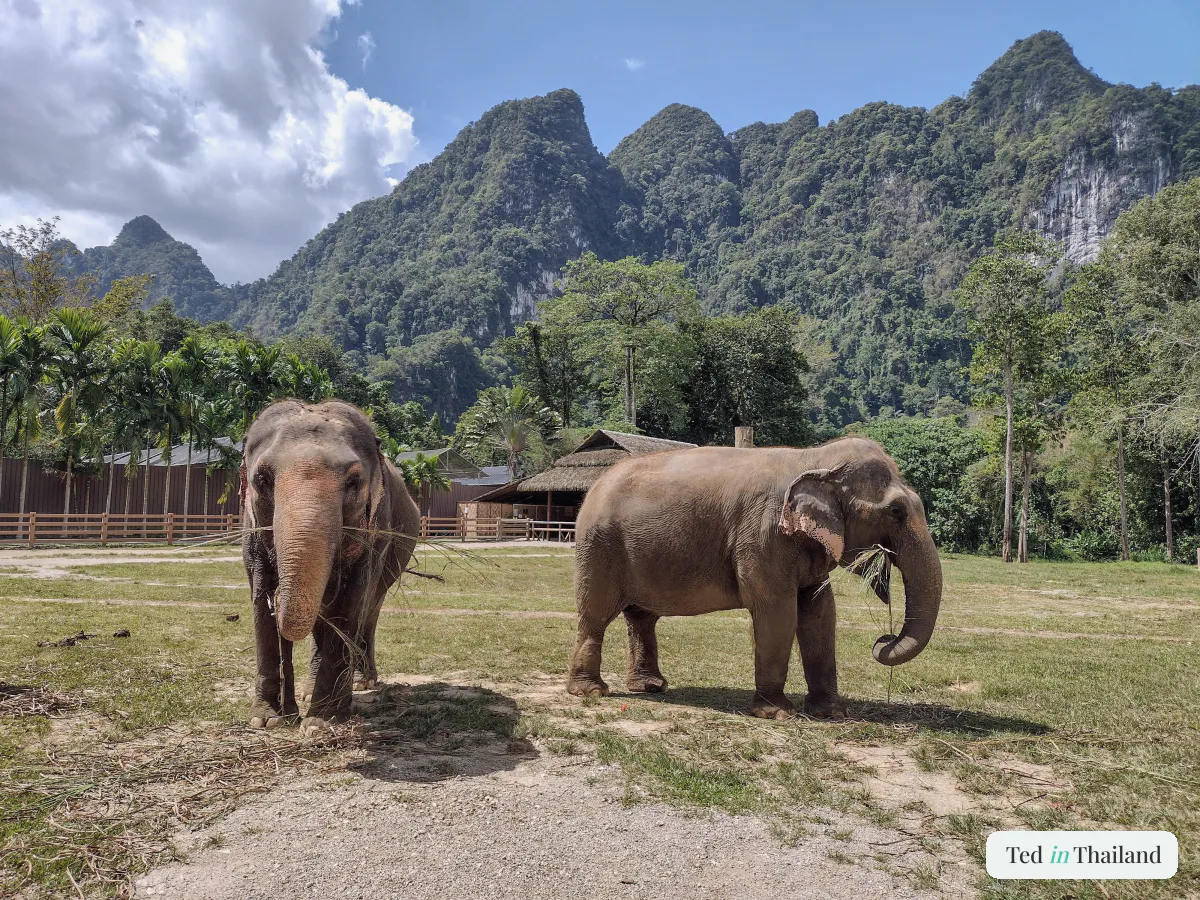
For adventure seekers, the elephant sanctuary scene has shifted toward ethical "observation only" sanctuaries with no riding. Samui Elephant Haven is the most recommended.
ATV and quad tours are one of the most popular adventure activities on the island, with operators like X-Quad Samui and Samui Quad Motor running guided rides through jungle trails, rubber plantations, seasonal river crossings and to beautiful viewpoints. Expect to pay around 1,000 to 2,500 THB for a one- to two-hour ride, and book a morning slot when the trails are cooler and less dusty.
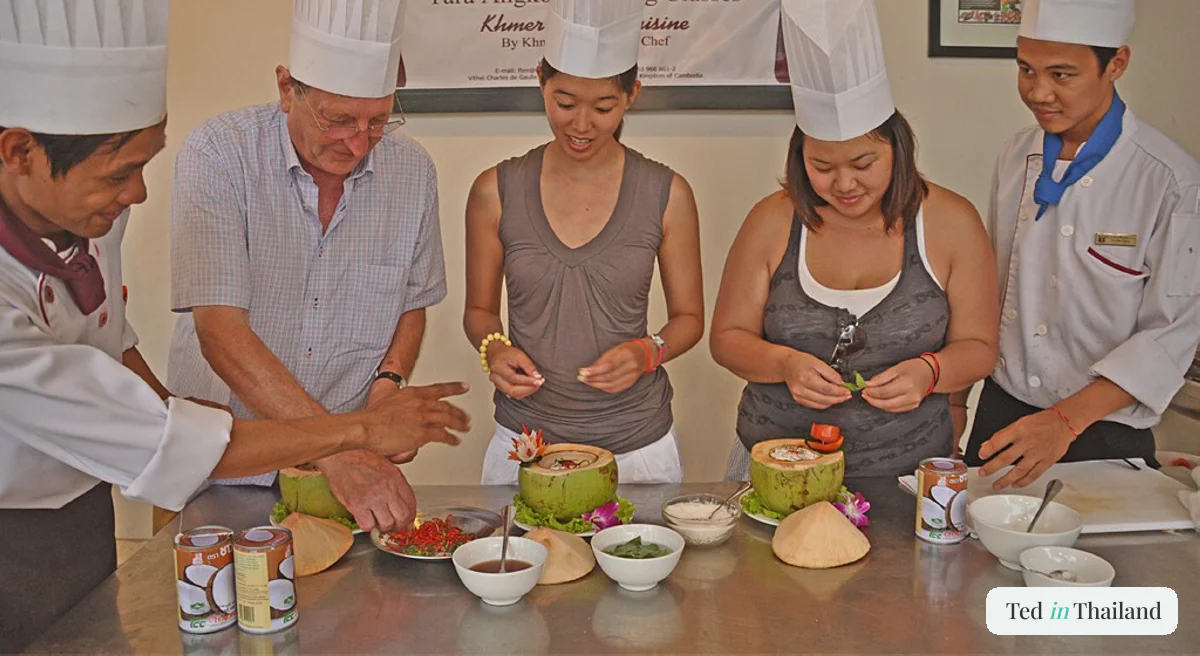
A cooking class in Koh Samui is another must. Smiley Cook in Bophut starts with a morning market walk before the hands-on session, and repeat visitors say the market segment is the most educational part.
Samui has several solid Muay Thai gyms for drop-in training at around 200 to 600 THB per class.
Spas and Massage
The spa and Koh Samui massage scene here ranges from 100-baht street-side Thai massages to multi-day wellness retreats that will reorganize your entire nervous system.
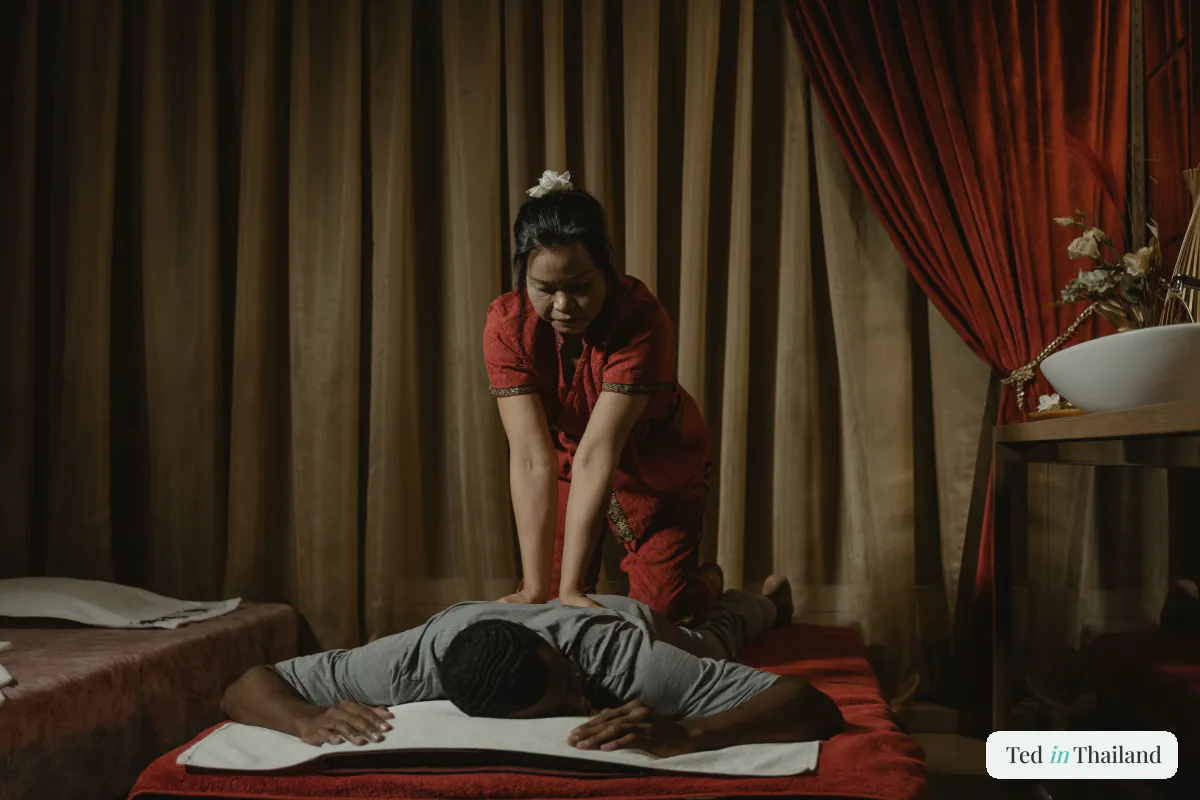
For a quick daily massage, local parlors offer solid traditional Thai massage starting around 150 to 400 THB for 60 minutes. The key is picking busy shops with high turnover and fresh linens.
For something special, Tamarind Springs Forest Spa near Lamai is the island's most distinctive wellness experience. It's a rainforest setting with natural steam caves, cold plunge pools, and extended spa rituals. Their multi-stage forest packages run around 3,500 to 8,500 THB. Book ahead, especially on weekends.
Kamalaya on the south coast is the serious wellness play. They run structured multi-day detox, stress management, and holistic programs with medical input and full-board healthy cuisine. It's not cheap, but it's the real deal for anyone who wants more than just a rubdown.
For mid-range spa days, Eranda Herbal Spa does excellent herbal steam and massage packages from around 900 to 5,500 THB.
Ted's Tip
For the best value Koh Samui massage, find a local family-run parlor and ask the manager which therapist they'd recommend. Named senior therapists at small shops often deliver better deep work than expensive resort spas. And always tell them your pressure preference upfront. "Medium" means very different things to different therapists. Check out the full massage and spa guide here.
Water Activities and Island Hopping
Some of the best experiences on Koh Samui actually happen off the island. The Gulf of Thailand surrounding Samui is packed with day-trip destinations, and getting out on the water at least once should be on everyone's list.

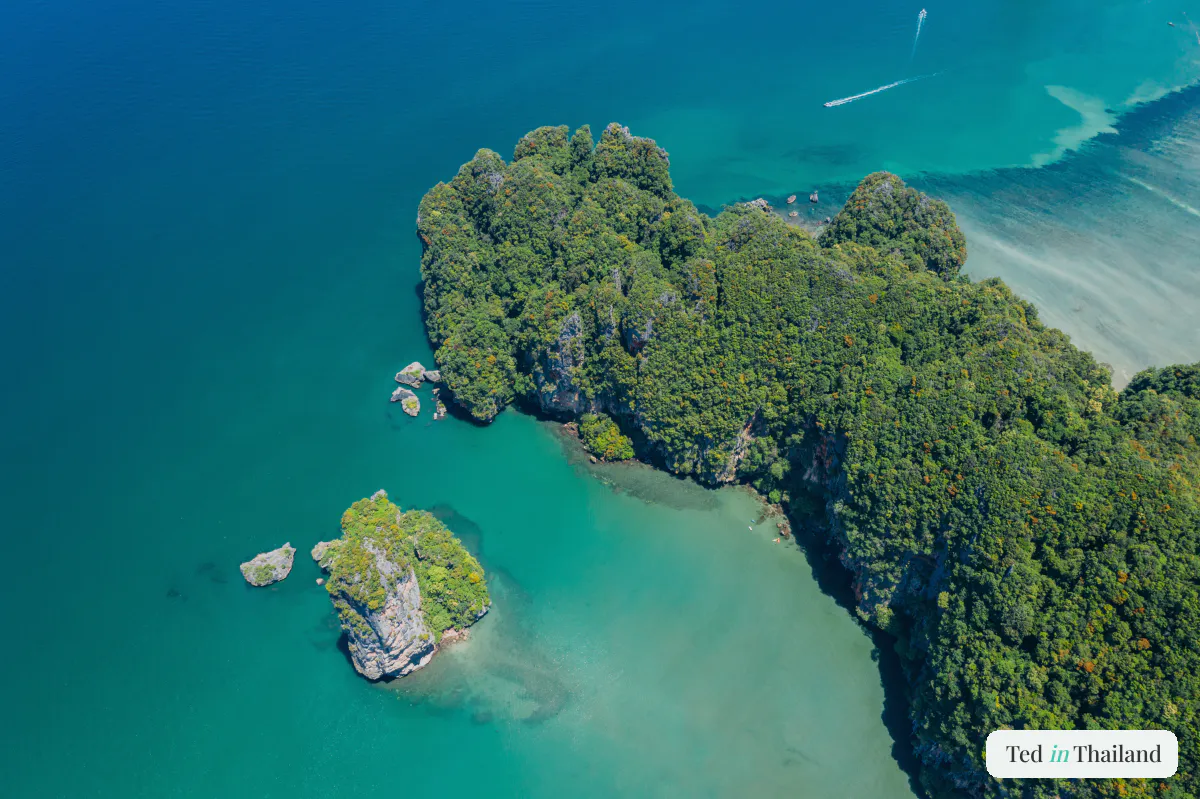
Ang Thong National Marine Park is the flagship day trip. It's a stunning archipelago of islands about an hour by speedboat from Samui, and the day typically includes kayaking through sea caves, snorkeling over coral, and hiking up to viewpoints overlooking emerald lagoons. This is worth the early morning and the 1,500+ THB price tag. Book in advance during high season. I cover operators and what to pack in my Ang Thong marine park guide.
Closer to home, the Koh Taen and Koh Madsum combo is the most popular half-day snorkeling trip. Koh Taen has shallow coral gardens with decent visibility on calm days, and Koh Madsum (Pig Island) is exactly what it sounds like: a small sandy islet with tame pigs wandering the sandbars. It's goofy and fun. Longtail boats run from the southern piers like Thong Krut, and you can arrange a trip for around 800 to 2,000 THB. Morning departures get you calmer seas and better snorkel visibility. Full details in my Pig Island and Koh Taen guide.
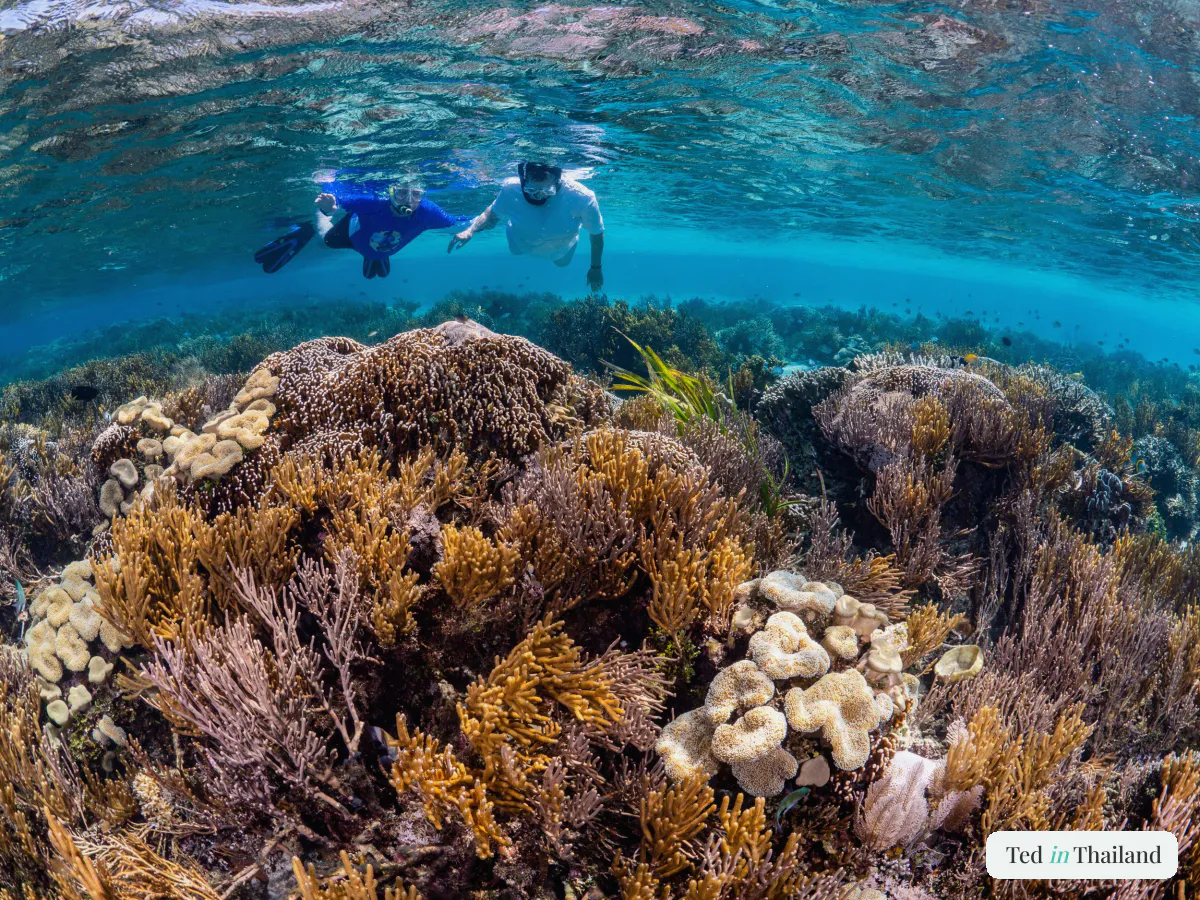
For serious snorkeling and diving, Koh Tao is the real destination. It's one of the best dive sites in Thailand, with clear water and healthy coral diversity that Samui's nearshore spots can't match. Day trips run from Samui but expect a longer travel day. If diving is a priority, consider spending a night or two on Koh Tao rather than trying to cram it into a day trip from Samui. Discover dives from Samui-based operators run around 3,000 to 4,500 THB, and certified 2-tank dives are 3,800 to 6,000 THB. I break it all down in my scuba diving from Samui guide.
Getting between Koh Samui, Koh Phangan, and Koh Tao is straightforward by ferry. Koh Samui to Koh Phangan is a common hop, especially for the Full Moon Party. There's no major Full Moon Party on Samui itself. The famous one is on Koh Phangan, and many Samui visitors ferry over for the night. Plan ahead for that one because ferries, crowds, and accommodation on Phangan get chaotic around full moon dates. My Full Moon Party survival guide covers the logistics.
Ted's Tip
If you do one boat trip, make it Ang Thong National Marine Park. If you do two, add the Koh Taen and Koh Madsum snorkeling day. And if snorkeling Koh Samui from shore is your plan, stick to Silver Beach and Coral Cove on calm mornings. Read more about Ang Thong National Park in my full guide.
Where to Eat in Koh Samui
The food scene here punches way above its weight for an island. You can eat a full plate of pad see ew for 60 baht at a Tesco Lotus food court or drop serious money on a sunset dinner at Dining on the Rocks at the Six Senses. Both experiences are worth having.
The night markets are where I'd start.

The Fisherman's Village Night Market in Bophut runs on weekend evenings and is easily my favorite food crawl on the island. Street food stalls, live music, seafood BBQ, and a walking atmosphere that makes you want to stay all night. Get there early for the best seating and cooler temperatures. (Full Fisherman's Village night market guide here.)
Lamai Night Market is a solid alternative with local flavors and grilled seafood at slightly lower prices. I cover it in my Lamai night market guide.
For a more local morning experience, the Maenam Morning Market near the pier is where residents buy breakfast. Fresh fruit, fish stalls, and not a tourist in sight before 8 a.m.

For sit-down restaurants, Prego in Fisherman's Village has become an island institution for Italian food.
Down south, the Thong Krut fishing pier is one of my all-time favorite food experiences on Samui. You pick your fish straight off the boat, hand it to a local stall, and they grill it while you sit on the beach. Show up late afternoon when the fishermen return, bring cash and a translator app, and order whole fish or crab for the best value. I wrote up the whole ritual in my Thong Krut seafood pier guide.
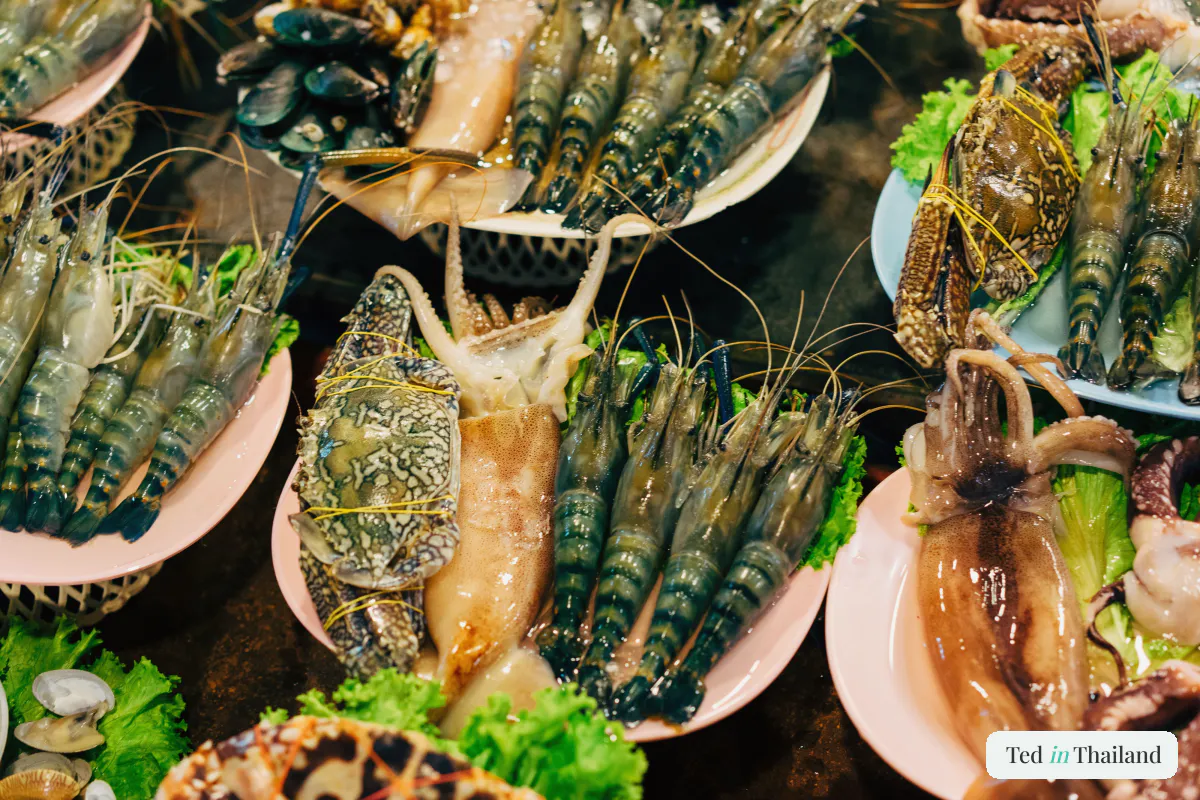
Foodie? My "Where to eat in Koh Samui Guide" is what you were looking for! (you're welcome)
Ted's Tip
The single best food rule on this island: eat where the locals eat. High turnover is the best proxy for freshness and safety. If a stall is busy and cooking in front of you, it's going to be good. If food is sitting uncovered in the sun, keep walking.
Koh Samui Nightlife
Let's keep this simple. If you want nightlife, you want Chaweng. That's where the clubs, beach bars, and late-night energy live. Green Mango, Ark Bar, and Sound Club are the main venues, and they run loud music and DJs well past midnight. Ark Bar doubles as a daytime beach club, so you can start with afternoon cocktails and transition right into the evening without moving.

For beach clubs, Koh Samui has a growing scene. Coco Tam's in Bophut is famous for its beachfront fire show and beanbag seating on the sand. It's one of those places that just works. (See my Coco Tam's guide.)
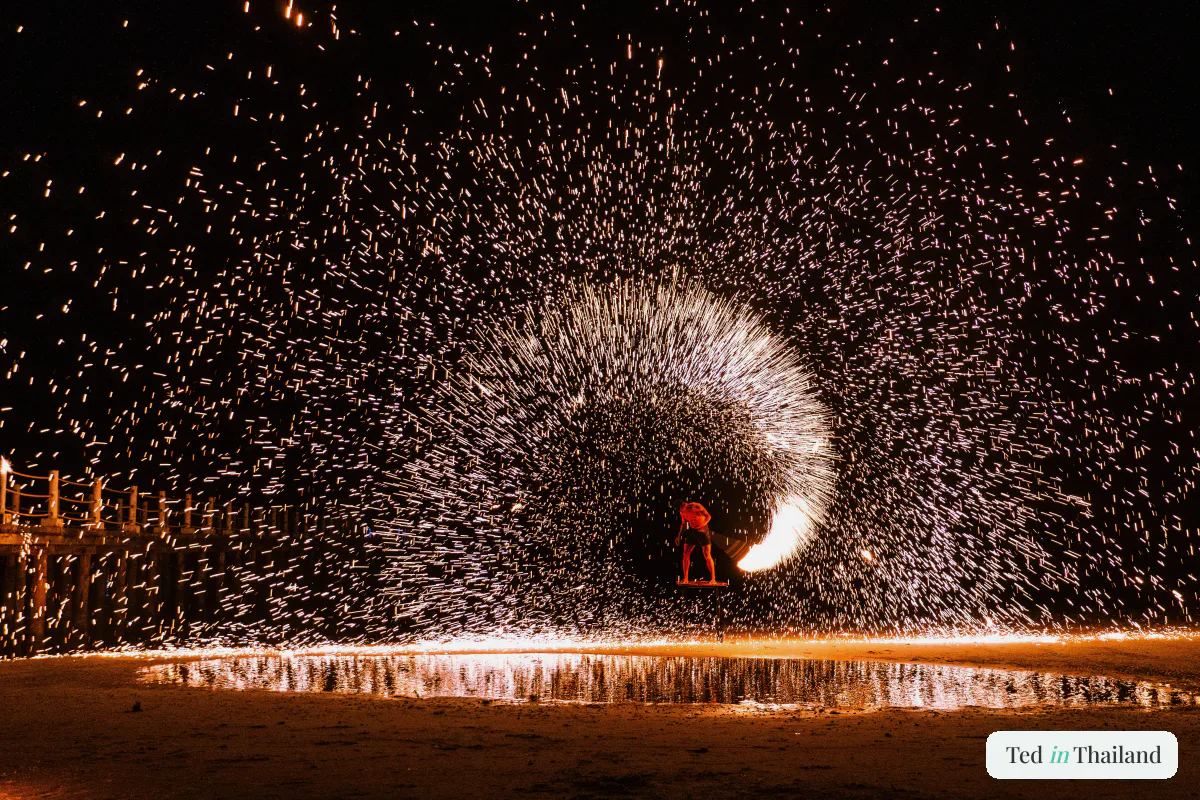
One thing to know: there is no Full Moon Party on Koh Samui. The famous one is on Koh Phangan, and you ferry over for it. I've written a Full Moon Party survival guide that covers exactly how to get there from Samui and back. For the full club-by-club rundown, see my Koh Samui nightlife guide.
Getting Around Koh Samui
This is one of those topics where a little knowledge saves you real money.
The best option for most visitors is using ride-hailing apps. InDrive and Grab are the two main ones. Once you're past the airport, these apps are widely available, dirt cheap and the most convenient option for getting around (picture Uber, just 75% cheaper plus legendary Thai hospitality). I compared every option head-to-head in my Grab vs InDrive vs Bolt vs taxi vs songthaew comparison.
For those who want the real local experience:
The classic island transport is the songthaew: converted pickup trucks with bench seats in the back. They run along main roads and cost very little, but routes and schedules can be unpredictable. They work for simple A-to-B trips along the coast but aren't ideal if you need to get somewhere specific on a tight schedule.
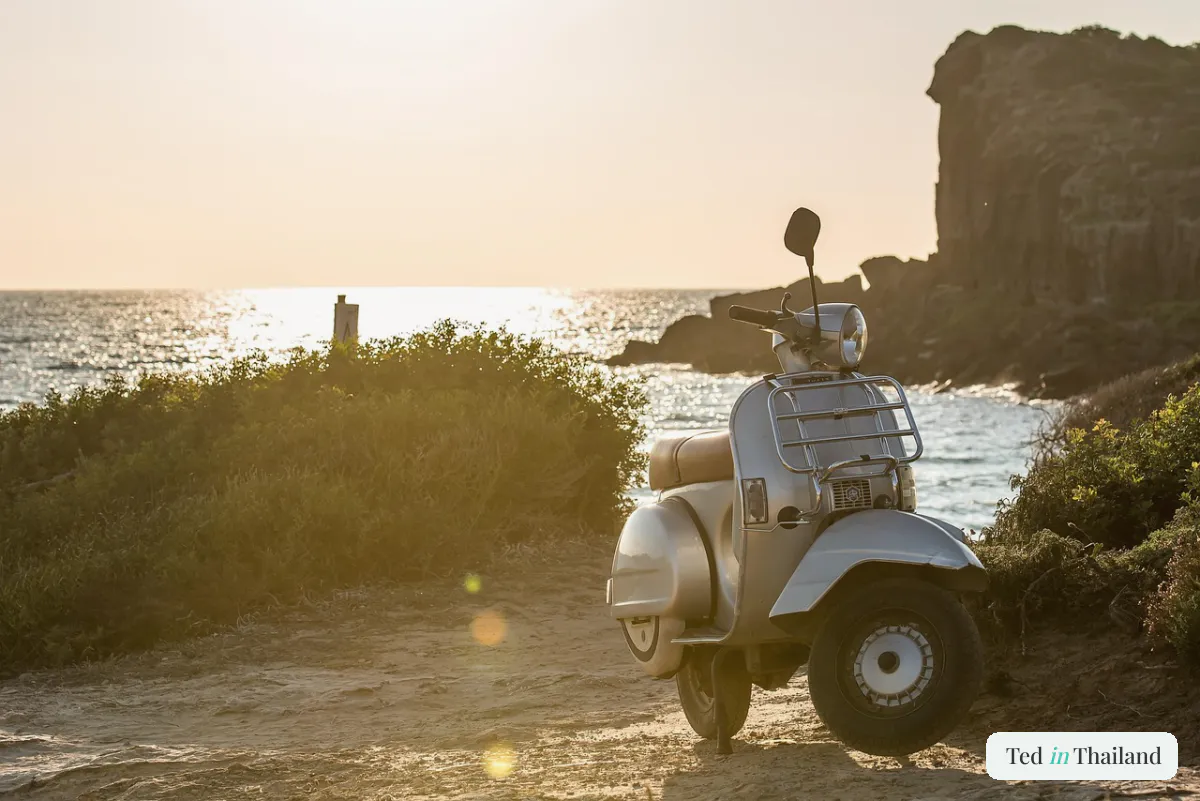
Renting a scooter is a common way long-stay visitors get around, and it gives you total freedom. That said, motorbike accidents are the single biggest cause of serious injury for travelers on Samui. Helmets are legally required, and you should carry a valid International Driving Permit. Read my scooter rental guide before you ride.
For a car rental, several agencies operate near the airport, and it may be a smart option for families or anyone uncomfortable on two wheels. Expect to pay more than a scooter but gain air conditioning and actual doors.
This summary doesn't fully do justice: See my full transport guide and the rideshare comparison post for the deep details.
Ted's Tip
Download InDrive before you land. It'll be your most-used app on the island. For the airport pickup on arrival though, use the official taxi counter inside the terminal or a pre-arranged transfer (rideshares aren't allowed on airport property).
Families, Couples, Digital Nomads and Budgets
One of the reasons I love this island is that it works for completely different types of travelers.
Families thrive here. Choeng Mon, Maenam, and Bophut are the go-to family zones with calm, shallow water and walkable dining. The Four Seasons has a legendary kids' program (their "Babies for All Seasons"), and mid-range picks like the Kimpton Kitalay offer solid kids' clubs too. For activities, Paradise Park, Samui Aquarium, and the elephant sanctuaries keep children entertained. I cover all of it in my Koh Samui family vacation guide.

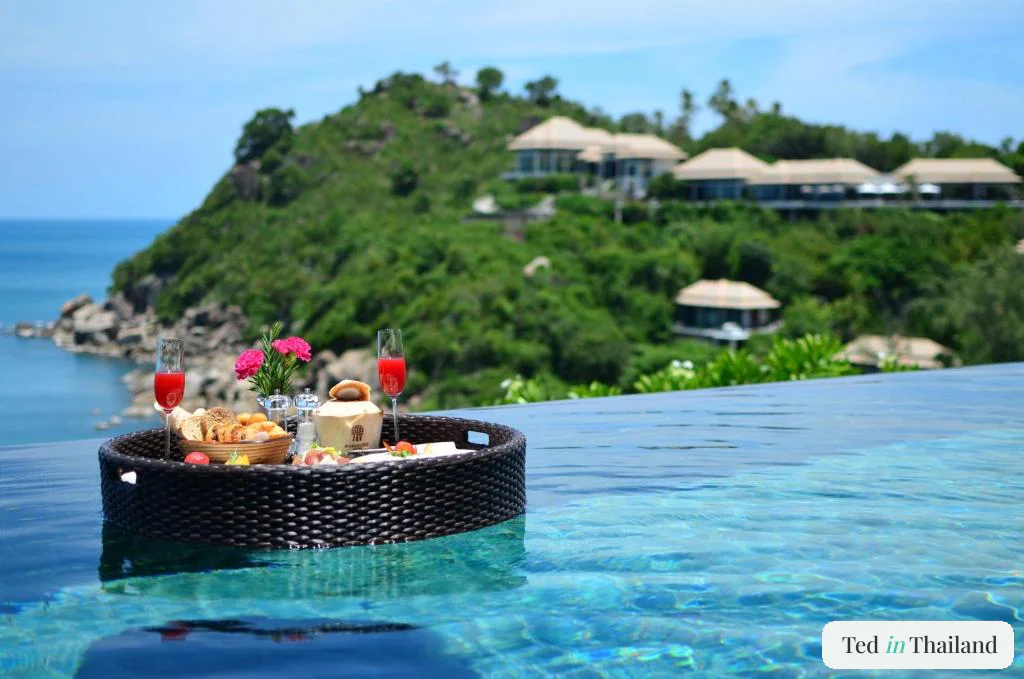
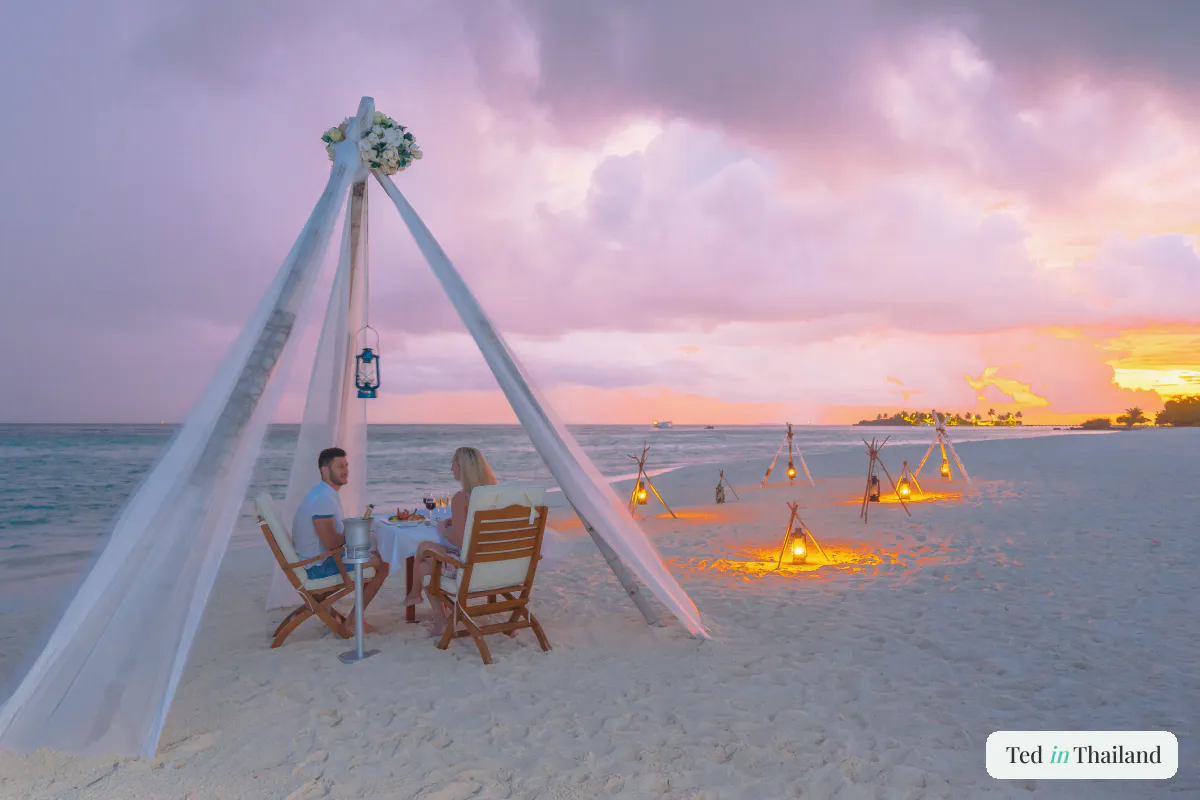
Couples and honeymooners should look at the west coast. Lipa Noi and Taling Ngam deliver the sunset romance, and properties like the Conrad and Banyan Tree are built for that kind of trip. A sunset dinner cruise, a day at Tamarind Springs, and an evening at Coco Tam's watching fire dancers on the beach. That's a pretty perfect few days. (Full honeymoon guide linked separately.)
Digital nomads have been discovering Samui in a big way. Monthly condo rentals in areas like Maenam can be negotiated down to 10,000 to 15,000 THB per month. Desk+Chair coworking space offers fast fiber and 24/7 access, and there's solid cafe culture in Chaweng and Bophut. The digital nomad visa now permits multi-year validity with per-visit stays up to 180 days. (Full nomad guide available.)
Budget-wise, here's the quick breakdown:
- Backpackers can do Samui on 1,000 to 1,500 THB per day (dorm, street food, local transport)
- Mid-range travelers should budget around 3,000 to 6,000 THB per day for a nice hotel, sit-down meals, and activities
- Luxury travelers can expect 15,000+ THB per day and up, depending on how far you want to go
- Street food plates run 40 to 150 THB, and a proper sit-down dinner is 200 to 1,500 THB depending on the restaurant
Ted's Tip
If you're staying a month or longer, always negotiate rent in person after arriving. Landlords commonly offer 10 to 40% discounts for multi-month commitments. Book a week online first, then go look at places and talk to owners directly. You'll almost always beat the platform price.
Money, Health and Safety Essentials
I won't sugarcoat this section because the practical stuff is what keeps a good trip from turning into a stressful one. A little prep goes a long way here.
Money
Thai ATMs charge a flat operator fee of around 220 to 250 THB per withdrawal with a foreign card, and you can't avoid it. The move is to withdraw larger amounts less frequently. Pull out 10,000 THB and that fee works out to about 2.2%. Pull out 2,000 THB and you're paying 11%. Use a no-foreign-transaction-fee debit card (like the Capital One 360 Account Debit Card) if you have one, and always decline dynamic currency conversion at ATMs and shops. When the screen asks "charge in your home currency?" hit no and choose Thai baht (unless your card charges foreign transaction fees, which would mean it's time for a new debit card).
Keep smaller notes (20, 50, 100 THB) handy for markets, tips, and transport. Lock the rest in your hotel safe. I've got a full ATMs and currency exchange guide for the deep details.
Health
Bangkok Hospital Samui is the main private facility on the island with 24/7 emergency, pediatrics, and ICU capability. For anything non-urgent, smaller clinics and English-speaking pharmacies handle routine issues faster and cheaper.
Save these emergency numbers in your phone before you arrive: 1669 for ambulance, 191 for police, 1155 for the Tourist Police (English-speaking, 24/7).

Mosquito repellent with DEET or 20% picaridin is a daily must (no, those bracelets don't work). Dengue is seasonal and sometimes serious, and the mosquitoes that carry it bite during the daytime, not just at night. More on this in my mosquitoes, dengue and vaccines guide, and my medical care guide covers hospitals and clinics in detail.
Insurance
Get travel insurance that explicitly covers the activities you plan to do. Standard policies often exclude motorbike riding and scuba diving. If you plan to rent a scooter or dive, buy a policy that names those activities and check the license requirements in the fine print. This is not optional.
Better safe than sorry. This is the most important thing you do in your travel prep. I already compiled the best and cheapest insurance options for you in my must-read insurance guide.
Safety
The biggest risk to travelers on Samui isn't crime. It's motorbike accidents. Wear a helmet, carry a valid license, and don't ride at night on unfamiliar roads. The island is generally very safe, but treating it like any other travel destination and not letting your guard drop completely is smart practice. Full guides on medical care, travel insurance, and scooter safety are all available.
Ted's Tip
Save your hotel's address in Thai script on your phone. Ask the front desk to type it out for you. This single move makes taxis, deliveries, and any "where are you going?" situation infinitely easier. Also be sure to prepurchase an eSIM for instant connectivity. Check out the best eSIM and data options here.
Conclusion
After eight years of waking up to this island, I still find new beaches, new restaurants, and new trails I haven't explored. That's the thing about Koh Samui. It's big enough to keep surprising you but small enough that the ring road puts everything within reach.
Whether you're coming for a long weekend or a month-long stay, the formula is simple: pick the right area for your travel style, build in at least one boat day, eat where the locals eat, and leave room for the moments you didn't plan. Some of my best memories here came from turning down random side roads and ending up at a waterfall pool or a fishing pier I'd never heard of.
This guide is your starting point, but I've got deep-dive guides on nearly every topic covered here. Beaches, hotels, restaurants, transport, activities, specific temples, individual night markets. Dig into whatever catches your eye. And when you land at that little open-air airport and the warm Gulf air hits you for the first time, you'll understand why I never left.
See you on the island! - Ted
FAQ
Is Koh Samui worth visiting?
Absolutely. It's one of Thailand's most complete islands. You get world-class beaches, excellent food from street stalls to fine dining, temples, waterfalls, water sports, nightlife, and a genuine local culture that hasn't been paved over by tourism. It works for backpackers, families, honeymooners, and digital nomads equally well. After living here for years, I'm more convinced of that than ever.
How many days do I need in Koh Samui?
Seven to ten days is the sweet spot for a first visit. That gives you time to explore multiple beaches, do a boat trip to Ang Thong National Marine Park or the Koh Taen/Koh Madsum snorkeling run, hit the temples, enjoy the night markets, and still have a day or two for just sitting on the beach doing absolutely nothing. Four or five days works if you're focused, but you'll leave wishing you had more time.
What is the best time to visit Koh Samui?
February through April for the most reliable sunshine and calm seas. May through September (green season) offers lower prices and fewer crowds with occasional showers. Avoid October and November if you need guaranteed beach weather, as that's peak monsoon. December bounces back beautifully and is peak season with holiday pricing.
Is Koh Samui expensive?
No, but it depends on how you travel. Backpackers can manage on 1,000 to 1,500 THB per day. Mid-range travelers should budget 3,000 to 6,000 THB daily. Luxury can run 15,000+ THB per day. Street food runs 40 to 150 THB per plate, local massages start at 250 THB, and dorm beds go for 300 to 700 THB.
How do I get from Bangkok to Koh Samui?
Fly direct into Koh Samui Airport (USM). The flight takes about an hour, with fares ranging from 2,000 to 6,000+ THB depending on timing and season. The budget alternative is flying to Surat Thani and taking a ferry across (about 2.5 to 3 hours total including the land transfer to Donsak Pier).
Is Koh Samui safe for families?
Very. Beaches like Choeng Mon, Maenam, and Chaweng Noi have calm, shallow water perfect for kids. Major hotels offer kids' clubs and babysitting. Bangkok Hospital Samui provides 24/7 pediatric care. The main thing families should know: child car seats aren't standard in island taxis, so bring a travel car seat if your children need one.
Do I need a scooter on Koh Samui?
Not really. InDrive and Grab cover most transport needs affordably. Scooters give you freedom and are the cheapest way to explore, but motorbike accidents are the leading cause of serious tourist injuries on the island. If you ride, wear a helmet, carry a valid International Driving Permit, and make sure your travel insurance explicitly covers motorcycle use.