Best Hostels & Budget Stays for Backpackers in Samui Island
A local's honest breakdown of the best hostels, dorm beds, and budget stays across every corner of Koh Samui.
- Koh Samui budget accommodation starts at 250 THB per night for fan dorms, with AC pods around 450 to 800 THB
- Pick your area first: Chaweng for social, Lamai for chill, Mae Nam for cheap, Bangrak for ferry access
- Always negotiate long-stay rates in person for stays over two weeks to save 30 to 50 percent
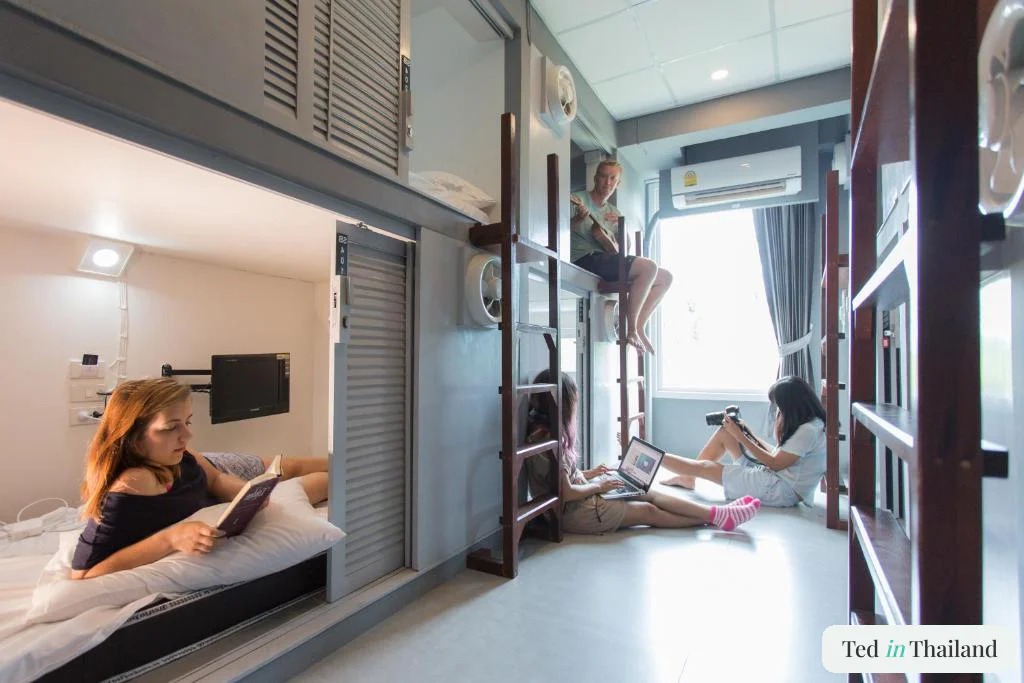
- Capsule-style dorm pods are worth the small upgrade over open bunks for sleep quality
- Eat at street stalls and local spots to keep daily food costs between 60 and 150 THB per meal
Here's something most travel blogs won't tell you: Koh Samui is absolutely crushable on a backpacker budget. Seriously. While the island has its share of infinity-pool resorts where a single cocktail costs more than a dorm bed, there's a whole parallel world of hostels, guesthouses, and cheap bungalows that let you wake up near gorgeous sand for the price of a decent lunch back home. After eight years of living here, I've watched friends, readers, and random folks I've met at the 7-Eleven all pull off incredible Samui trips for way less than they expected. You just need to know where to look and which areas to match to your vibe. This guide covers real hostel names, actual nightly rates, and the honest stuff nobody posts on Instagram. Let's get into it.
What a Hostel Bed Actually Costs on Koh Samui
Before I throw hostel names at you, let's set the numbers straight so you know what "budget accommodation" actually means here.
- Fan dorm bed (no AC): 250 to 450 THB per night. These are your classic wooden-bungalow-style setups or simple shared rooms. Perfectly livable, but hot from March through June.
- AC dorm bed (modern hostel): 450 to 800 THB per night. You'll get lockers, charging ports, and sometimes free breakfast at this tier.
- Private fan room or basic bungalow: 400 to 900 THB per night depending on location and season.
- Private AC room (budget hotel level): 900 to 1,800 THB per night. Closer to Chaweng Beach pushes you toward the top end.
- Monthly long-stay deals: 12,000 to 25,000 THB per month for a basic one-bedroom condo or long-stay hostel discount. Off-season and in-person negotiation can bring that down even further.
So yes, you can sleep on this island for under $10 a night. That's real.
For the full picture of what a backpacker trip here costs once you add food, transport, and activities, see my Koh Samui on a Budget breakdown. And if your budget stretches a little further than a dorm bed, my boutique and mid-range hotels guide covers the next tier up.
Ted's Tip
If you're staying two weeks or longer, always ask the hostel or guesthouse owner for a weekly or monthly rate. Owners prefer guaranteed occupancy and will often cut 30 to 50 percent off the nightly price. The trick is to book one or two nights first, then negotiate in person once you're there.
Where to Base Yourself: Picking Your Area First
The single biggest decision for budget travelers isn't which hostel to book. It's which part of the island to sleep in. Samui has very different neighborhoods, and each one attracts a different type of backpacker. Here's the cheat sheet:
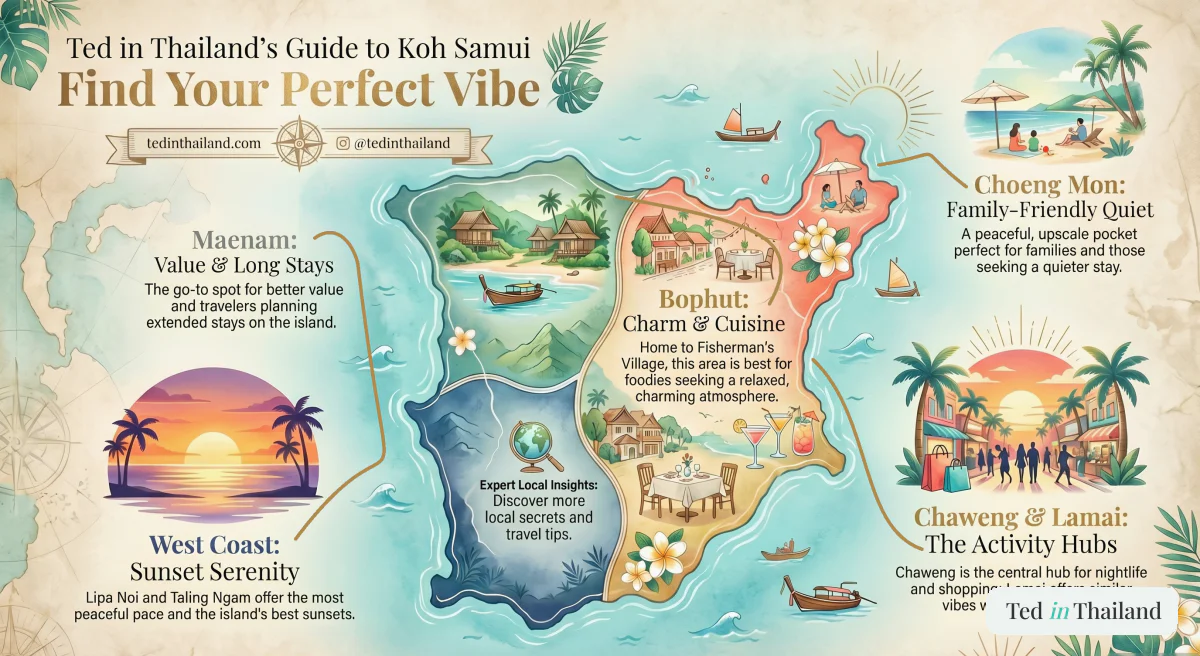
- Chaweng is where the action is. The highest density of hostels, the most nightlife, and the easiest access to restaurants and convenience stores. If you want to meet other travelers, this is ground zero. You'll pay a small premium for the convenience, but the tradeoff is you can walk everywhere at night without needing a scooter.
- Lamai is the laid-back alternative. Fewer party hostels, but more affordable private rooms and bungalows. Koh Samui Lamai Beach has a great stretch of sand, solid local restaurants, and a calmer evening scene.
- Bophut and Fisherman's Village give you evening market dining and a boutique-backpacker feel. Walking to Fisherman's Village Koh Samui for the night market and then stumbling back to a cheap guesthouse is a very solid Friday night.
- Mae Nam on the north shore is the quietest, cheapest long-stay option. Less tourist density, lower prices, and a genuinely local feel. Mae Nam Samui is popular with digital nomads and slow travelers who want to stretch their baht as far as possible.
- Bangrak is the ferry-logistics play. If you're island-hopping to Koh Phangan or Koh Tao, staying near Bangrak Koh Samui and the Big Buddha pier saves you a taxi fare every time you catch a boat. Big Buddha Beach Koh Samui is right there, too.
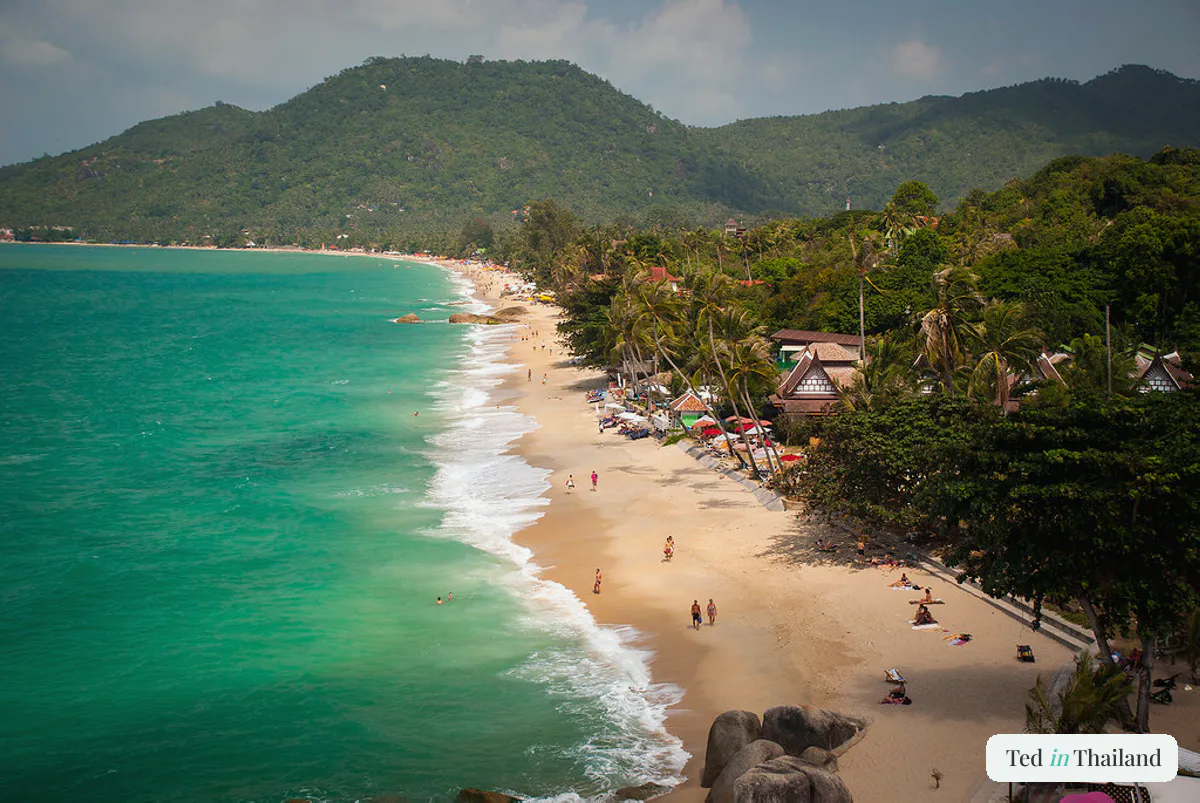
I go deeper on each neighborhood (with restaurant picks, beach breakdowns, and walkability maps) in my full area guide, but the short version is: pick the area first, then pick the bed.
Ted's Tip
Solo travelers who want to make friends should start in Chaweng for the first few nights, then migrate to Lamai or Bophut once they've found their crew. You get the best of both worlds without committing to party-hostel noise for your entire trip.
Best Hostels in Chaweng (The Social Hub)
Chaweng has the most hostel beds on the island by far. Here are the ones I'd actually recommend.

Lub d Koh Samui is the big name. It's an international-standard hostel right on Chaweng Beach with pod-style dorms, privacy curtains, two pools, a beach club, and organized social events. Dorm beds run 350 to 1,200 THB. It's loud, it's social, and it's the easiest place on the island to meet people as a solo traveler. Ask for a capsule pod on the upper floor away from the beach club if you actually want to sleep.
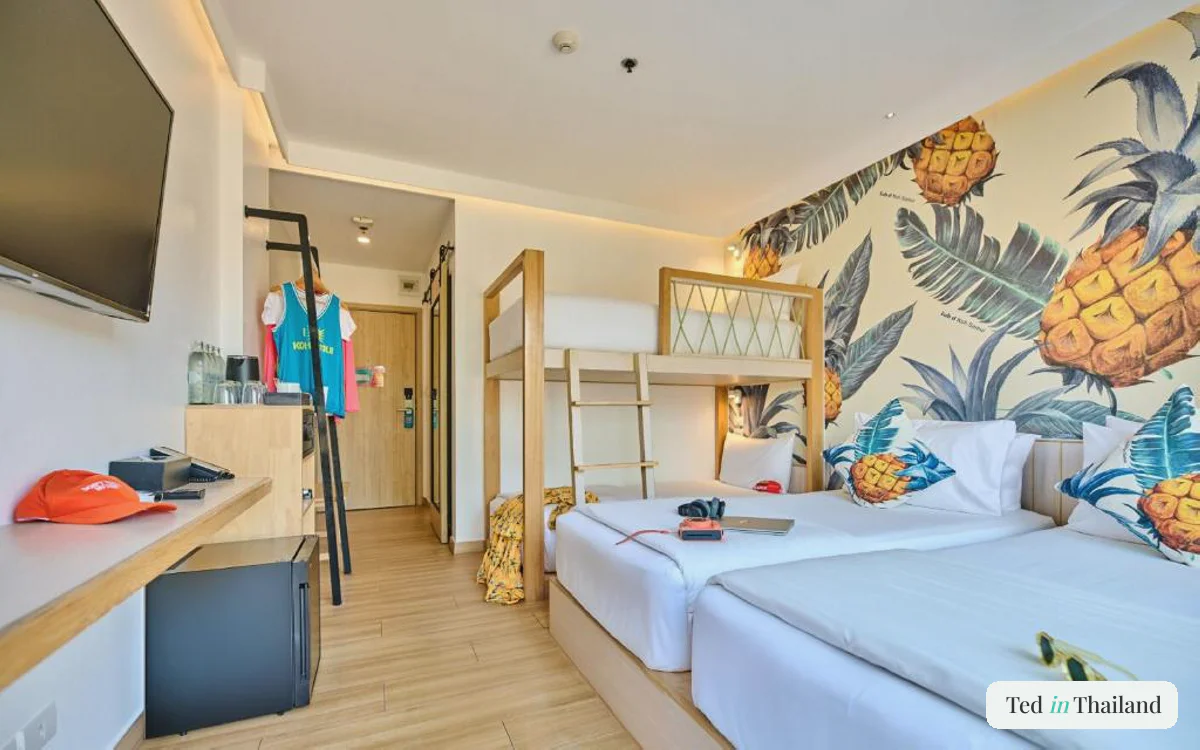
P168 Hostel is a capsule-dorm hybrid that's become a favorite with solo travelers who want a social scene without the full party-hostel volume. The rooftop terrace is where everyone hangs out, and the ground-floor cafe doubles as a co-working spot. Capsule dorms with curtained privacy start at 300 THB.
Blackjack Bar & Hostel is exactly what it sounds like: a bar with beds upstairs. It's party-first, with late music and friendly owners. Dorm beds run 300 to 900 THB. If you need sleep, this is not your place. If you want cheap drinks and instant nightlife, it's perfect for a two-night stay.
Other solid Chaweng options include Liquid Lounge (bar-hostel combo, 300 to 900 THB dorms), The Hideout Samui near Chaweng Noi (quieter local feel, 200 to 700 THB dorms), Timeless Hostel (garden pool, shuttle service, 200 to 700 THB), and the cluster of smaller hostels like Samui Beach Hostel along the beach road (200 to 800 THB with immediate sand access). The Chaweng budget hotel scene is genuinely competitive, which means prices stay reasonable even in high season.
Ted's Tip
At any Chaweng hostel, ask for a bunk away from the street side or bar area. One simple bunk-placement request at check-in is the difference between sleeping great and lying awake listening to bass at 2 AM. Capsule-style pods are dramatically better for sleep and phone calls than open bunks. If privacy matters to you, always choose capsule over open dorms.
Bangrak & Bophut: Ferry Access and Night-Market Living
If you're planning to hop between islands, or if you'd rather have night-market dinners than club nights, this stretch of the north coast is excellent budget territory.
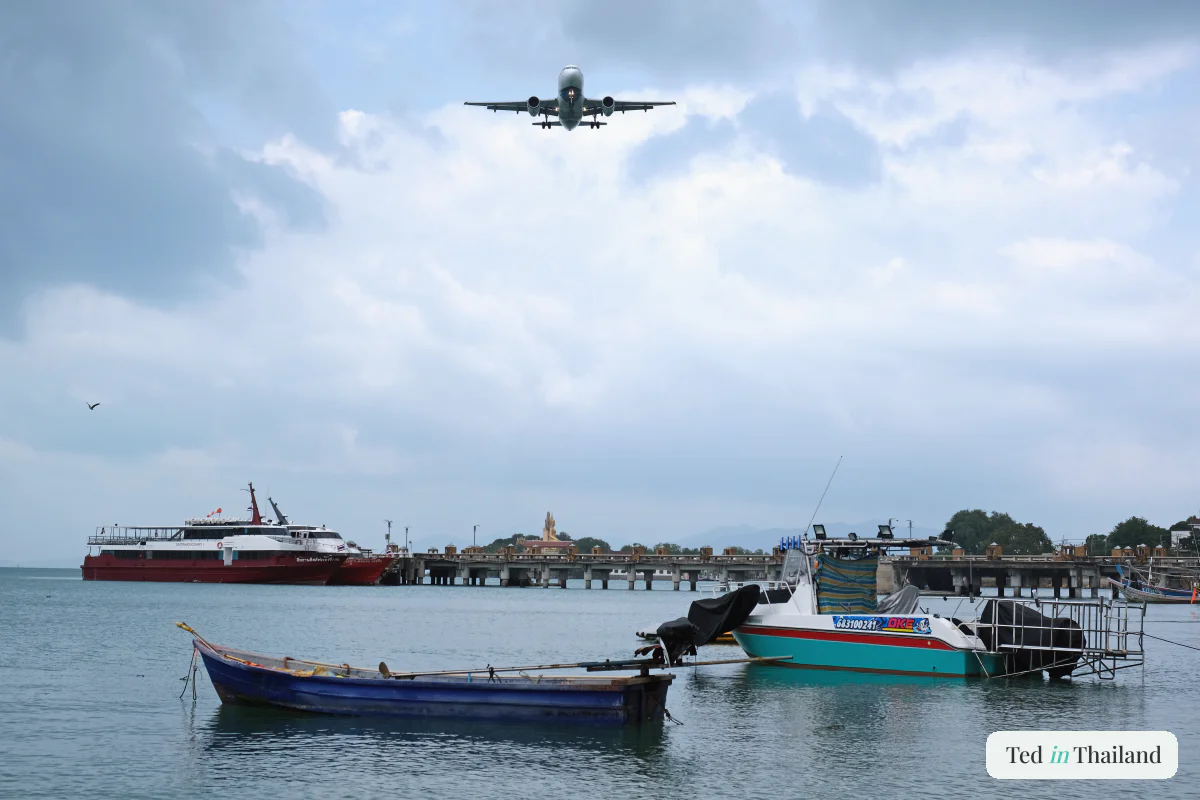
Samui Backpacker Hotel near Bangrak sits right by the Big Buddha pier area, which means you can roll out of bed and onto the ferry to Koh Phangan without paying for a taxi. Dorm beds start at 200 THB, private rooms around 600 THB. There's a pool, a pool bar, and a tour desk that can sort Full Moon Party packages. The vibe is social and ferry-focused.
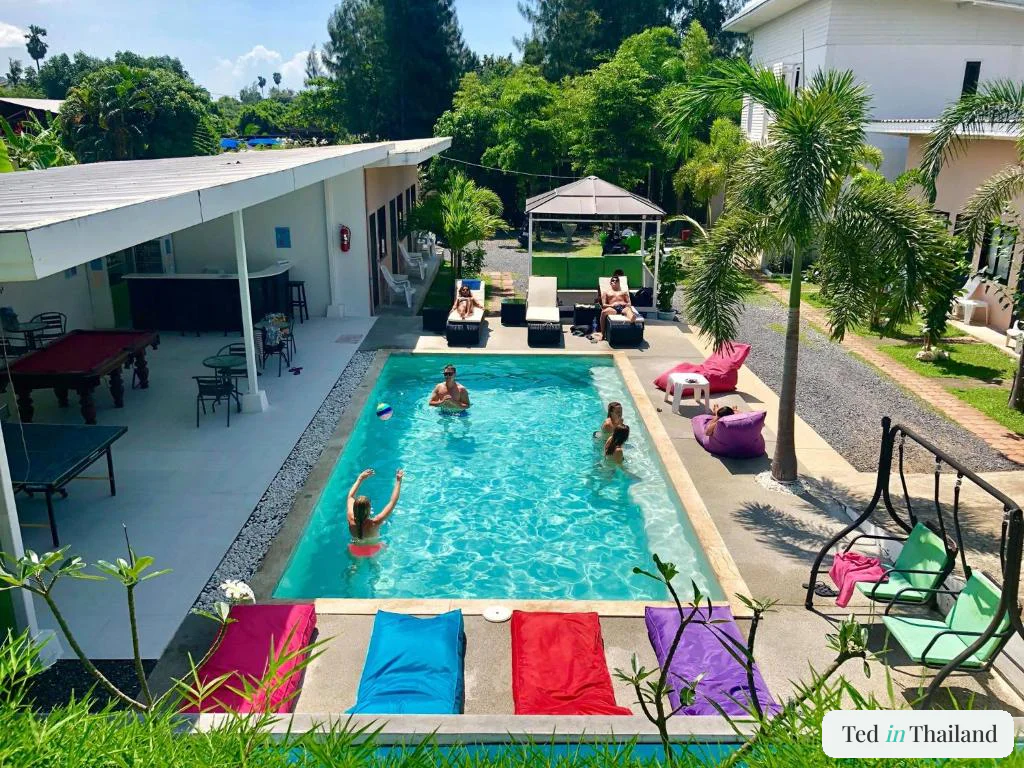
Us Hostel Samui in Bophut is walkable to Fisherman's Village, with garden common areas, a cafe, bike rental, and genuinely helpful staff. Dorm beds run 200 to 700 THB. It's practical, clean, and the kind of place where the staff remembers your name.

Chill Inn Samui near Choeng Mon Beach has AC dorms with individual lockers and towels included, plus a pool and on-site restaurant. The crowd is a mix of backpackers, families, and digital nomads. Dorms start at 250 THB, and the mornings are noticeably calmer than anything in Chaweng.
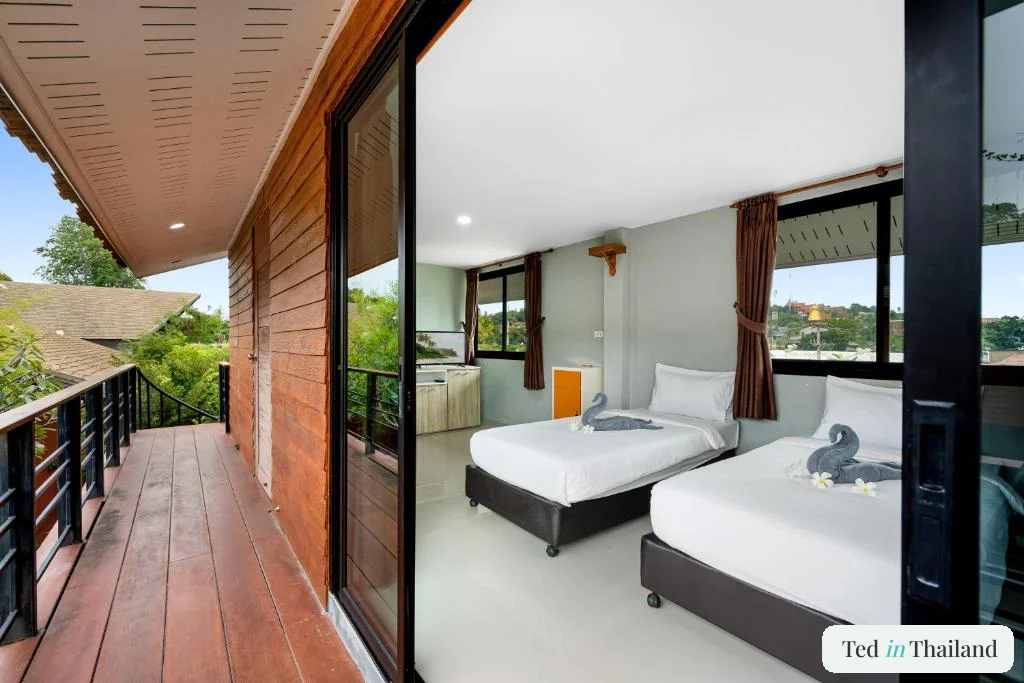
Hi Samui Hostel, also near Choeng Mon, is the quiet pick. It's family-run with a garden common area, library, and study zones. Popular with longer-stay travelers and remote workers. Dorms with lockers start at 300 THB. If you value calm over chaos, this is where you want to be.
Quiet North & Lamai: Cheap Beds Without the Bass Line
Not everyone wants to sleep next to a DJ booth, and Samui delivers for that crowd too.
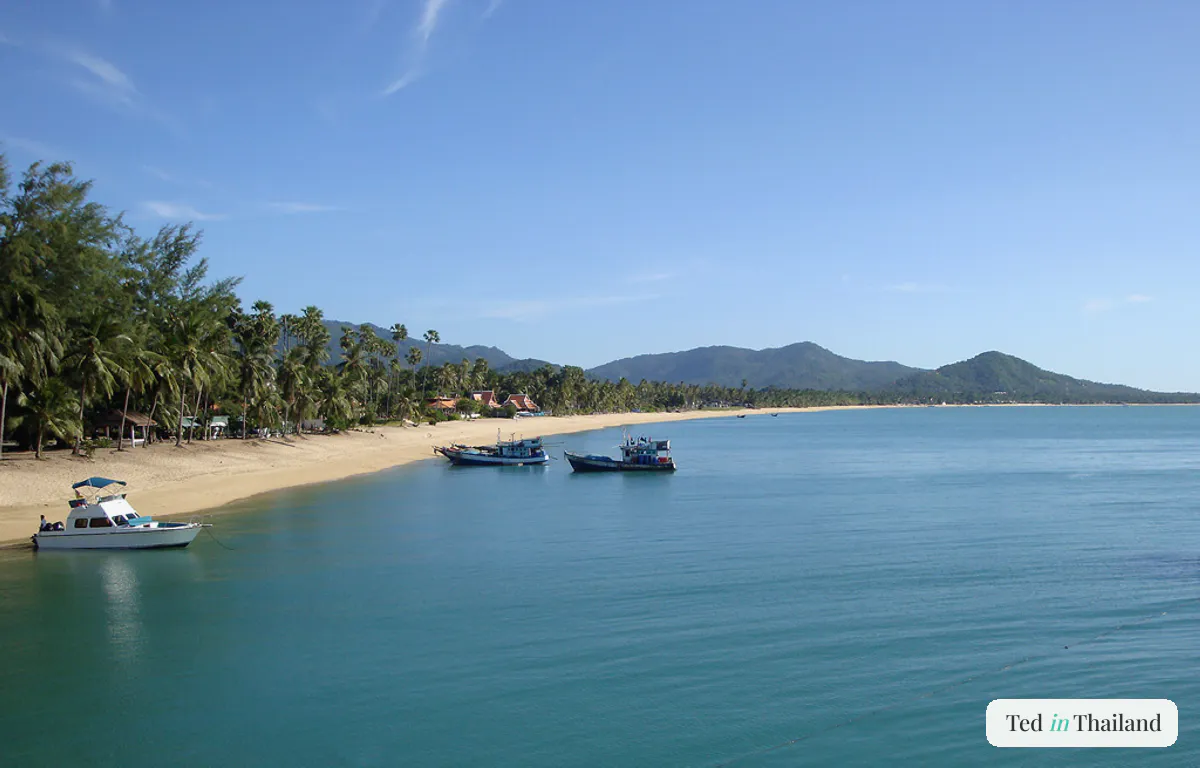
Tian Ming Hostel in Mae Nam is small, modern, and consistently gets high cleanliness ratings. It has a lounge with a PS5, a small kitchen, and that quiet north-shore feel. Dorm beds go for 250 to 700 THB. It's a great base for travelers who want to save money and explore by scooter during the day.
Down south, Nid's Bungalows in Lamai offers that classic Thai budget-bungalow experience close to the beach and local restaurants. Nightly rates run $40 to $85 for private rooms. It's no-frills, but the location and value are hard to beat.
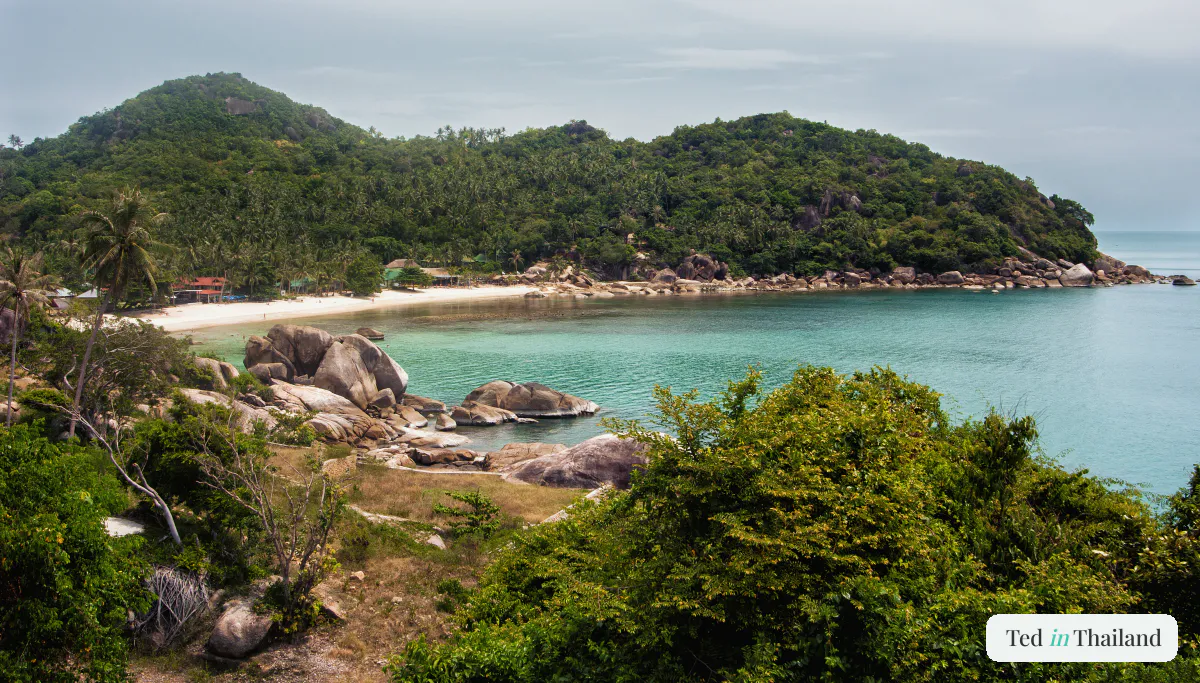
Crystal Bay bungalows near Maret give you a sheltered bay with calm mornings and local seafood stalls right outside. Private units start around $50 per night. Housekeeping frequency varies by property, so ask upfront.
For something more social but off the main Chaweng circuit, the Dreamcatcher Hostel and similar picks in quieter areas offer private rooms from $35 to $90 per night, with a mellow social vibe and lower prices in exchange for a short scooter ride to the busier beaches.
Ted's Tip
The quieter areas are where your daily budget goes the furthest. A dorm in Mae Nam plus street food from the local night stalls can keep your total daily spend under 700 THB easily, and you're still on a gorgeous island with turquoise water. That's hard to beat anywhere in Southeast Asia.
What a Samui Dorm Is Actually Like Inside
Let me be straight with you here, because this is where most hostel guides get vague.
Pods vs. open bunks is the biggest quality-of-life decision. Capsule-style beds with curtains are genuinely, dramatically better for sleep and privacy. Open bunks in a ten-bed room with one shared bathroom can be rough, especially during hot season. If a hostel offers both, pay the extra 100 to 200 THB for the pod.
Lockers are standard in organized hostels, but smaller guesthouses sometimes only have small shared lockers. Bring a medium padlock and a luggage cable lock. Theft is rare, but unsecured bags are the most common avoidable risk.
AC and hot water: expect strong AC in most Chaweng hostels but occasionally weak hot water in the cheapest dorms. Ask the front desk to test it on arrival if it matters to you.
Cleanliness is generally good, but occasional reports of bedbugs or dirty rooms do pop up at the lowest-price places. My rule: always check reviews from the last three months, not the overall rating. A place that was great two years ago might have changed hands. Inspect your bedding when you arrive and you'll be fine.
Booking Tactics That Save You Real Money
A few things I've learned from watching hundreds of backpackers come through:

- High season (December through March): book Chaweng hostels six to twelve weeks ahead. Dorms fill up fast, especially on weekends and around the Full Moon Party dates.
- Low season (May through October): walk-in bargains are real. You can literally show up and negotiate. This doesn't work in December.
- Always ask for the total price. Cleaning fees, service charges, and platform fees can add 10 to 30 percent to the number you see in the listing headline.
- Long-stay negotiation is a game-changer. If you're staying two-plus weeks, ask for a monthly rate in person. Owners prefer reliable occupancy and will often cut you a deal that makes the math much better than nightly booking.
- Work exchange still exists on Samui. Some hostels and guesthouses offer free or discounted stays in exchange for reception work, cleaning, or helping run social events. Ask about it, get the terms in writing, and you can seriously extend your trip.
Getting Around and Eating Cheap
I have a full guide on getting around Koh Samui that covers scooters, taxis, songthaews, and rideshares in detail, so I'll keep this brief.
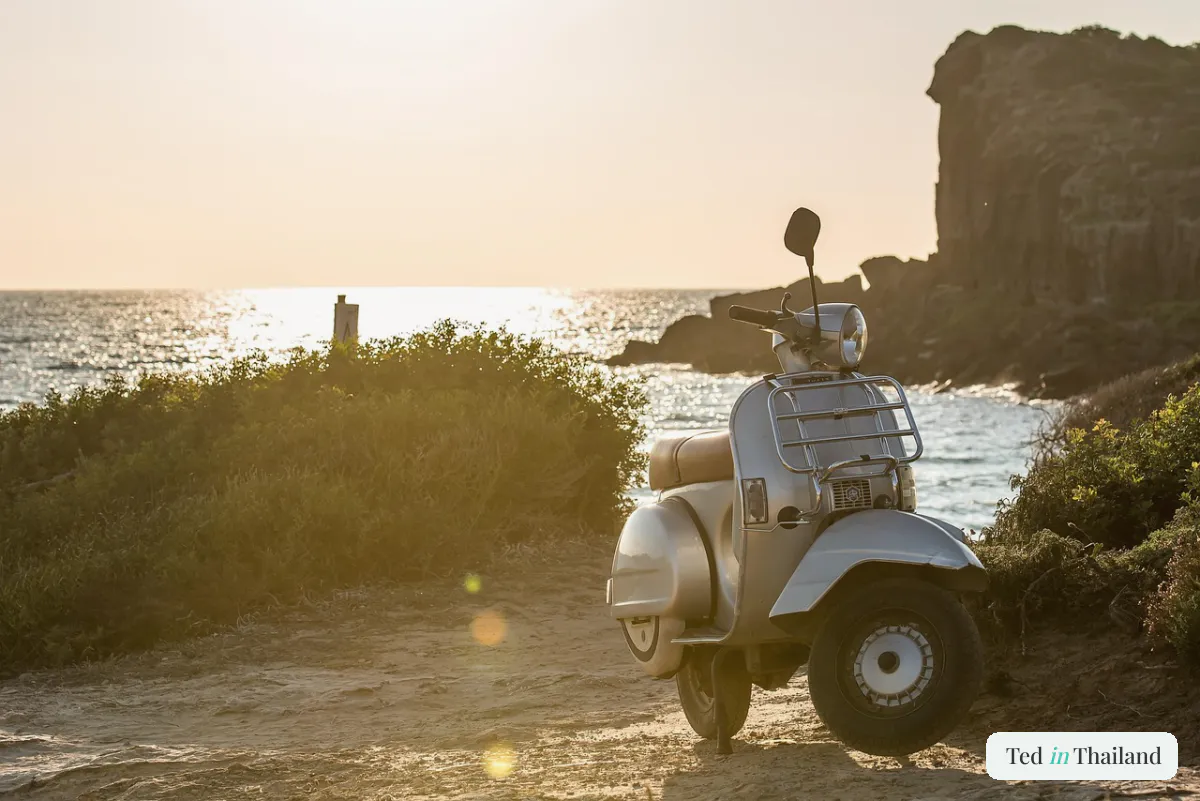
For budget mobility, most backpackers rent a scooter. It's cheap and gives you full island freedom. Just be smart about it and read the scooter guide before you rent.
If you'd rather not ride, I put the apps head-to-head against taxis and songthaews in my Grab vs. InDrive vs. Bolt vs. Taxis vs. Songthaews comparison.
For food, street stalls and local restaurants serve pad Thai, fried rice, and grilled chicken for 60 to 150 THB per meal. Western cafes charge 200 to 400 THB. Stick mostly to local food and your daily total for meals plus transport can stay between 300 and 700 THB. Markets and hostel kitchens stretch that even further.

I break down all the best cheap eats in my street food and cheap eats guide, but the short version is: eat where the locals eat, and your wallet will thank you.
Ted's Tip
Many hostels offer free or cheap airport pickup if you book directly. Group pickups from the airport are also available through most tour desks. Either option saves you from haggling at the arrivals curb, which is never fun after a long flight.
Final Thoughts
Koh Samui on a budget is not only possible, it's genuinely great. The island has real hostel infrastructure, cheap and delicious food, and enough beach variety to fill weeks without spending much. The key is picking the right area for your travel style first, then choosing the bed that matches your noise tolerance and social preferences. Whether you're a social butterfly who wants pool parties at Lub d or a quiet reader who'd rather sip coffee at Tian Ming, there's a cheap, comfortable bed waiting for you.
Come see for yourself. Your bank account can handle it.
FAQ
How much does a hostel cost per night in Koh Samui?
Fan dorm beds range from 250 to 450 THB (roughly $7 to $13), while AC dorms in modern hostels go for 450 to 800 THB ($13 to $23). Private rooms in budget hostels start around 400 THB for a fan room and 900 THB for AC. Prices climb during high season (December through March) and drop noticeably from May through October.
Is Koh Samui safe for solo backpackers?
Yes. Organized hostels have lockers, reception staff, and keycard access. Use basic precautions: lock your valuables, bring a padlock, and keep electronics in a hostel safe when available. Female travelers often recommend hostels with female-only dorm options or private rooms for extra comfort.
What's the best area for backpackers in Koh Samui?
Chaweng has the most hostels, nightlife, and social energy. Lamai is great for a calmer vibe with lower prices. Bophut gives you the Fisherman's Village night market scene. Mae Nam is the best value for longer stays. Bangrak is ideal if you're catching ferries to Koh Phangan or Koh Tao.
Should I book a dorm or a private room?
Dorms are the obvious budget pick, and modern capsule pods offer decent privacy. Private rooms make sense for couples or anyone staying longer than a week, since the per-night cost difference shrinks when you negotiate multi-night rates. In hot season (March through June), paying extra for AC is worth every baht.
When should I book hostels on Koh Samui?
Book six to twelve weeks ahead for high season (December through March), especially in Chaweng. For low season, you can often walk in and negotiate a rate on the spot. Midweek stays are almost always cheaper and quieter than weekends.
Can I find long-stay budget accommodation on Koh Samui?
Absolutely. Monthly condo rentals and long-stay hostel deals run 12,000 to 25,000 THB per month, and you can go lower off-season or by negotiating directly with owners. Some hostels also offer work-exchange arrangements for multi-week stays if you're flexible.